



If you or someone you care about is considering a total shoulder replacement, you have likely spent time researching the procedure and its potential risks. One topic that frequently comes up is glenoid loosening. This term refers to a gradual loss of stability in the socket-side implant of a shoulder replacement and is one of the most common complications following anatomic total shoulder arthroplasty. Understanding what glenoid loosening involves, and how modern technology aims to address it, can help you feel more confident as you consider your treatment options.
Key Takeaways
- Multiple factors can contribute to glenoid loosening, including implant positioning, bone density, rotator cuff health, and repetitive mechanical stress over time.
- Some modern implant systems use a fundamentally different design approach that may help improve long-term fixation.
- Advanced 3D surgical planning tools can support more precise implant placement tailored to each patient’s anatomy.
- Patients play an active role in their long-term outcomes through rehabilitation, follow-up care, and open communication with their surgeon.
A Quick Look at Shoulder Anatomy
Your shoulder is remarkably mobile, allowing you to reach overhead, throw a ball, and rotate your arm in ways most other joints cannot. This flexibility comes from its ball-and-socket design, formed where three bones meet: the humerus (upper arm bone), the scapula (shoulder blade), and the clavicle (collarbone).
The rounded top of the humerus forms the “ball,” which fits into a shallow, cup-like area on the scapula called the glenoid, the “socket.” Smooth cartilage covers both surfaces, allowing them to glide against each other. A group of muscles and tendons called the rotator cuff stabilizes the joint, while the deltoid muscle assists with lifting and reaching. This design provides exceptional range of motion but also makes the shoulder more vulnerable to wear over time.
How Total Shoulder Replacement Works
When cartilage in the shoulder deteriorates, whether from osteoarthritis, rheumatoid arthritis, a past fracture, or another condition, the joint can become painful and stiff. If non-surgical treatments stop providing adequate relief, a shoulder specialist may recommend a total shoulder replacement.
During this procedure, the surgeon removes damaged surfaces from both sides of the joint. A metal component replaces the humeral head, and a separate implant resurfaces the glenoid. Together, these recreate a smooth, functional joint surface. Patients typically begin a structured rehabilitation program shortly afterward to restore strength and mobility.
Most patients report meaningful improvements in pain and function. However, outcomes can vary, and potential risks do exist, including glenoid loosening.
Defining Glenoid Loosening
Glenoid loosening occurs when the socket-side implant gradually loses its secure attachment to the underlying bone. Instead of remaining firmly fixed, the component may begin to shift, rock, or separate from the bone over months or years.
A stable glenoid implant is essential for a well-functioning shoulder replacement. When stability is compromised, patients may experience increasing pain, reduced range of motion, or a sense that the shoulder no longer feels normal.
Factors That May Contribute to Glenoid Loosening
No single cause explains every case of glenoid loosening. Instead, several factors can work together to compromise the bond between the implant and bone over time.
Uneven Mechanical Loading
One commonly discussed contributor is the “rocking horse effect.” When the humeral component shifts upward, often due to rotator cuff weakness, it can cause the glenoid implant to tilt back and forth with repeated use. This uneven loading places ongoing stress on the bond between the implant and bone, which may gradually compromise fixation.
Bone Quality and Pre-Existing Wear
The condition of the glenoid bone at the time of surgery matters considerably. Patients with significant bone loss, low bone density, or uneven wear patterns may have less structural support available to anchor the implant. Surgeons account for these variables during planning, but challenging bone anatomy can still increase the difficulty of achieving a durable fit.
Implant Positioning
Research suggests that even small variations in implant alignment during surgery can influence long-term stability. Misalignment may concentrate stress in specific areas of the bone-implant interface, accelerating wear and increasing the risk of loosening over time.
Cement Breakdown
Many conventional glenoid implants rely on bone cement for fixation. Over years of use and repeated loading, the cement layer can develop tiny cracks. These microfractures may weaken the bond between the implant and bone, potentially allowing loosening to occur.
Rotator Cuff Health
A healthy rotator cuff helps distribute forces evenly across the shoulder joint. When the rotator cuff is weakened or torn, joint mechanics can change, placing abnormal stress on the glenoid component. This imbalance may accelerate loosening in some patients.
A Different Approach to Implant Design: The InSet® System
Because glenoid loosening has remained such a persistent challenge, implant designers have explored different approaches to how the socket component is built and secured. One such system is the InSet® Shoulder Implant System, developed by Shoulder Innovations, which I use in my practice.
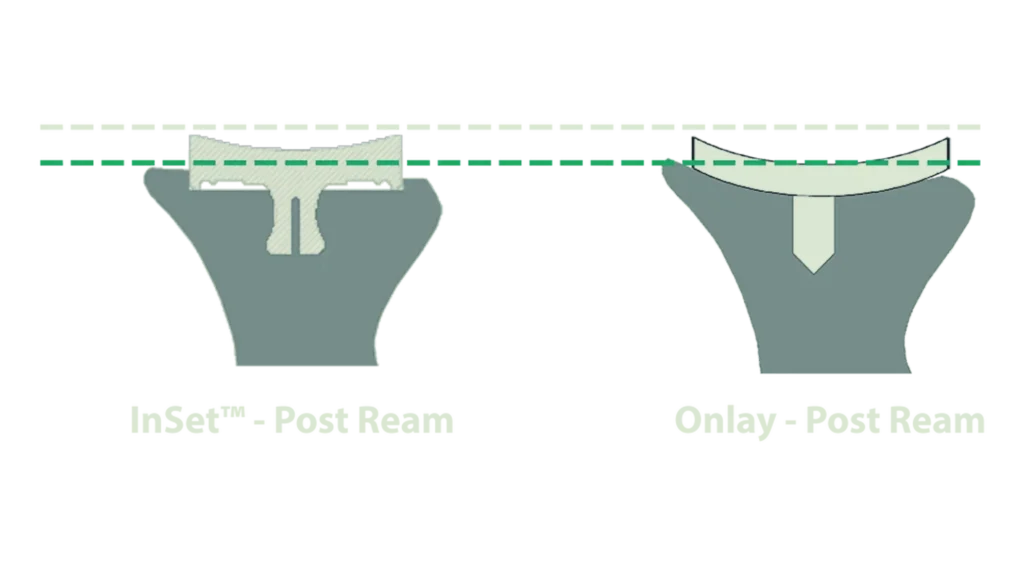
Traditional glenoid implants sit on top of the bone surface and are secured with pegs or a keel anchored by cement. While this method has a long clinical history, it leaves the implant exposed to mechanical stresses, including the rocking horse effect, that can contribute to loosening over time.
The InSet® glenoid uses a different strategy. Instead of resting on the bone surface, the implant is positioned within a pocket of dense bone in the glenoid fossa, essentially “set into” the bone rather than placed on top of it. This design aims to distribute forces more evenly and reduce stress concentrations at the bone-implant interface.
Finite Element Analysis, a computer-based method for simulating mechanical stress, suggests that this design may reduce rocking horse forces by as much as 87% compared with conventional glenoid implants.
Precision Planning With ProVoyance® Technology
Even advanced implants depend on precise surgical placement. Preoperative planning technology plays an important role in achieving this accuracy. I use ProVoyance® Shoulder to plan total shoulder replacements before the patient enters the operating room.
A CT scan of your shoulder is uploaded into the system, creating a detailed 3D model. This allows evaluation of the glenoid from multiple angles, identification of bone loss, and selection of the ideal implant size, type, and positioning for your specific anatomy.
This process functions as a virtual rehearsal of the surgery. By enabling careful planning ahead of time, it may help improve implant alignment and reduce positioning errors that can contribute to loosening. For patients, this means a surgical plan tailored to individual anatomy rather than a one-size-fits-all approach.
Why Bone Preservation Matters for the Future
An often overlooked consideration in shoulder replacement is the possibility of needing revision surgery in the future. Traditional surface-mounted glenoid implants may require removal of more bone during the initial procedure. If a second surgery becomes necessary later, limited remaining bone can restrict reconstructive options. The InSet® glenoid design was developed with this long-term perspective in mind. Because the implant sits within the bone rather than on top of it, more surrounding bone structure may be preserved.
What Patients Can Do to Support Long-Term Success
Implant technology and surgical technique are important pieces of the puzzle, but your involvement as a patient also plays a role in the long-term success of your shoulder replacement. There are several proactive steps you can take.
Follow your rehabilitation plan. Physical therapy after shoulder replacement helps rebuild strength, restore rotator cuff balance, and support the healing process. Sticking with your prescribed program can make a meaningful difference in your outcome.
Attend scheduled follow-up appointments. Your surgeon monitors the health of your implant through regular imaging. These visits can catch early changes that might not yet be causing symptoms, giving you the best chance for timely intervention if needed.
Communicate openly about any changes. If you notice new pain, stiffness, clicking, or instability in your shoulder, let your care team know promptly. Early detection tends to open more treatment possibilities.
Maintain your overall health. Staying active within the guidelines your surgeon provides and supporting good bone health contribute to the longevity of your implant.
Summary
Total shoulder replacement remains one of the most effective procedures for patients dealing with advanced shoulder arthritis or joint damage. It has helped many people return to valued activities and find relief from chronic pain. At the same time, glenoid loosening continues to be widely recognized as one of the most common complications following anatomic shoulder arthroplasty.
Some innovations in implant design are taking a fundamentally different approach to glenoid fixation, aiming to reduce the mechanical stresses that have historically contributed to loosening. Advanced planning tools add another layer of precision by helping surgeons tailor each procedure to the patient’s unique anatomy.
No surgical procedure can promise a perfect result for every patient. But by staying informed, choosing an experienced orthopedic surgeon who uses evidence-based technology, and actively participating in your recovery, you can help position yourself for a successful outcome.
Frequently Asked Questions
What exactly is glenoid loosening?
Glenoid loosening happens when the artificial socket component of a total shoulder replacement loses its firm attachment to the bone. The implant may gradually shift or separate from the bone surface over time. It is widely recognized as one of the leading reasons patients require revision surgery after anatomic shoulder replacement.
What symptoms might indicate that my glenoid implant is loosening?
Potential signs include shoulder pain that returns after a pain-free period, increasing stiffness, new grinding or clicking sensations during movement, and a feeling of instability. These symptoms can also indicate other issues, so consult your surgeon for a thorough evaluation.
How does the InSet® implant differ from traditional glenoid designs?
Traditional glenoid implants rest on the bone surface and attach with pegs or a keel held by cement. The InSet® glenoid sits within a pocket of strong bone in the glenoid fossa. This placement distributes forces more evenly and may reduce rocking horse stresses by up to 87% based on Finite Element Analysis testing.