



Many patients ask, “Where is rotator cuff tear pain?” Rotator cuff tear pain is most often felt along the outer shoulder and upper arm, though it can radiate or worsen with certain movements. Recognizing these common pain patterns may help you understand whether your symptoms are consistent with a rotator cuff injury and when to seek medical evaluation.
Key Takeaways
- Rotator cuff tear pain is typically felt as a deep ache in the front and side of the shoulder, though it may radiate down the outer arm toward the elbow.
- Pain often worsens at night, especially when lying on the affected shoulder, and may disturb sleep quality.
- Overhead activities, reaching behind the back, and lifting objects commonly aggravate rotator cuff tear pain.
- Associated symptoms include weakness, limited range of motion, and sometimes a clicking or popping sensation during movement.
Understanding the Rotator Cuff Anatomy
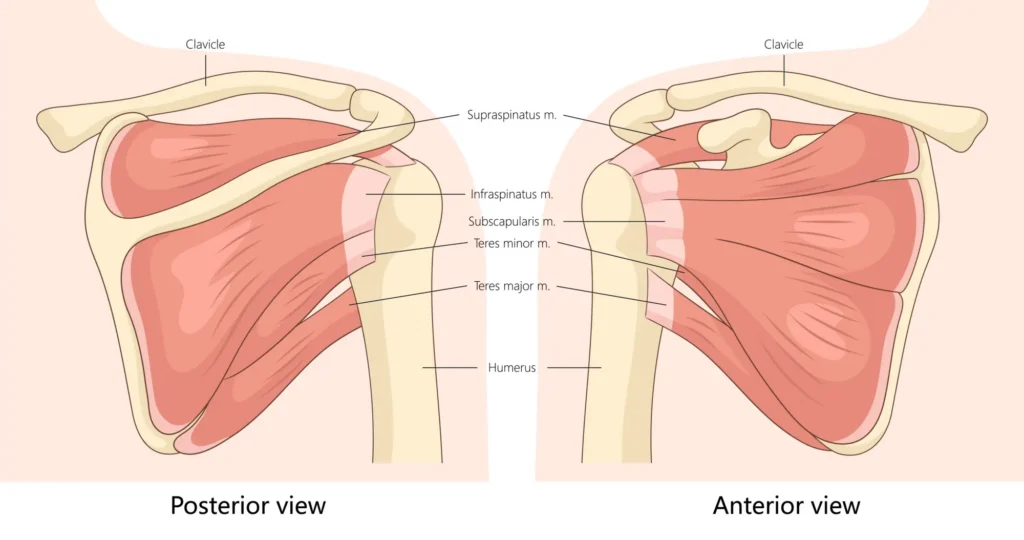
Before exploring where rotator cuff tear pain typically occurs, it’s helpful to understand the anatomy involved. The rotator cuff is composed of four muscles and their corresponding tendons that work together to stabilize the shoulder joint and enable arm movement. These muscles are the supraspinatus, infraspinatus, teres minor, and subscapularis.
The supraspinatus, which runs along the top of the shoulder, is the most frequently injured of the four muscles. This muscle is particularly vulnerable because its tendon passes through a narrow space between the acromion and the humeral head. The infraspinatus and teres minor help rotate the arm outward, while the subscapularis facilitates inward rotation. When any of these tendons tear, pain and dysfunction may follow.
Primary Location of Rotator Cuff Tear Pain
Many individuals with rotator cuff tears experience pain primarily in the front and side of the shoulder. This pain is frequently described as a deep, aching sensation rather than a sharp, superficial discomfort. Some people may experience discomfort in the back of the shoulder.
In some cases, the pain doesn’t remain confined to the shoulder itself. It may radiate down the outer arm, sometimes extending as far as the elbow. This pattern can occasionally cause confusion, leading some individuals to wonder if they have an elbow problem rather than a shoulder issue.
Pain Patterns Based on Specific Activities
Understanding where rotator cuff tear pain manifests also involves recognizing how certain movements and activities influence the discomfort. The location and intensity of pain may become more pronounced during specific actions.
Overhead activities can be particularly problematic for individuals with rotator cuff tears. Reaching up to grab something from a high shelf, painting a ceiling, or playing sports that involve overhead arm movements commonly exacerbate pain in the anterior and lateral shoulder. This occurs because elevating the arm above shoulder height increases the demand on the rotator cuff muscles.
Lifting objects, especially when the arm is extended away from the body, may intensify pain in the shoulder region. Even relatively light items may trigger discomfort if the rotator cuff is compromised. The pain might start in the shoulder and radiate down the arm as the muscle attempts to stabilize the joint.
Reaching behind the back is another movement that often provokes pain. Activities like tucking in a shirt or reaching for a back pocket can become challenging and uncomfortable. This particular motion stresses different portions of the rotator cuff and may produce pain in the front of the shoulder or deep within the joint.
Nighttime Pain and Sleep Disturbance
One common feature of rotator cuff tear pain is its tendency to worsen at night. Many patients report that the discomfort becomes more intense when lying down, particularly when lying on the affected shoulder.
The reasons for increased nighttime pain are multifaceted. Lying on the injured shoulder places direct pressure on the inflamed tissues, which can be quite uncomfortable. Certain sleeping positions may inadvertently place the shoulder in positions that compress or stretch the damaged tendons. Reduced distractions during nighttime hours may make pain more noticeable, and inflammatory processes in the body may naturally increase during rest periods.
This nighttime pain frequently disrupts sleep quality. People with rotator cuff tears often find themselves waking multiple times throughout the night or having difficulty finding a comfortable sleeping position.
Pain Variations Based on Tear Type and Severity
The specific location and character of pain can vary depending on the type and severity of the rotator cuff tear. Understanding these variations can provide additional insight into where rotator cuff tear pain might be experienced in different scenarios.
Partial-thickness tears involve damage to only a portion of the tendon. These tears may produce pain that is more intermittent and activity-related. Some individuals with partial tears experience relatively little pain at rest but have discomfort during specific movements. Full-thickness tears, where the tendon is completely severed from the bone, typically produce more persistent and severe pain.
Acute tears that result from sudden trauma usually present with immediate, sharp pain at the moment of injury. This sharp pain may then transition into a persistent deep ache in the shoulder region. The initial pain is sometimes accompanied by a tearing or popping sensation felt in the shoulder.
For degenerative tears that develop gradually over time, the discomfort may start as a mild ache that worsens over weeks or months. This type of pain commonly has a gradual progression and may initially be dismissed as a minor strain.
Associated Symptoms Beyond Pain Location
Additional symptoms often accompany the pain and can help confirm whether a rotator cuff injury might be present. Weakness in the shoulder is a possible symptom of rotator cuff tears. This weakness is particularly noticeable during overhead activities or when lifting objects away from the body. Some individuals describe a feeling that their arm might “give out” during certain activities.
Limited range of motion may accompany a rotator cuff tear. Active range of motion may be significantly reduced, particularly with overhead reaching and external rotation. Passive range of motion may be less restricted. Additionally, a clicking, popping, or crackling sensation may be felt or heard during shoulder movement.
Diagnostic Approaches to Localize and Confirm Pain Source
When you visit an experienced shoulder specialist with concerns about shoulder pain, they may use various methods to diagnose the source. A detailed medical history helps establish the pattern of symptoms. Your doctor will ask about pain location, what movements make it better or worse, and when symptoms began.
A physical examination involves specific tests designed to assess rotator cuff function. Your doctor may palpate different areas of the shoulder to identify tender spots and perform range of motion and strength testing.
Special orthopedic tests may be used during a physical exam to assess the rotator cuff. Maneuvers such as the empty can test and external rotation resistance test can help evaluate shoulder strength and function and may suggest which tendon is involved.
Imaging studies may also be ordered to provide additional information. X-rays are commonly used to rule out fractures, arthritis, or other bony abnormalities. Ultrasound allows real-time visualization of the rotator cuff during movement, while MRI offers a detailed assessment of soft tissues, including the rotator cuff tendons.
Treatment Implications Based on Pain Characteristics
The location, severity, and pattern of rotator cuff tear pain can influence treatment recommendations. Mild to moderate pain that is primarily activity-related may respond well to conservative treatment. This approach typically includes rest, physical therapy, anti-inflammatory medications, and possibly corticosteroid injections.
Severe injuries or persistent pain that significantly disrupts sleep and daily function may warrant consideration of surgical intervention. Rotator cuff surgery can often be done arthroscopically, a minimally invasive technique. The decision to pursue surgery depends on multiple factors including tear size, age, activity level, and functional impairment.
Summary
Rotator cuff pain is typically felt in the front and side of the shoulder. It may radiate down the outer arm toward the elbow. It characteristically worsens with overhead activities, lifting, and reaching behind the back. Nighttime pain and sleep disturbance are common features. If you’re experiencing persistent shoulder pain, consider consulting with a shoulder specialist for a diagnosis and guidance toward the most appropriate treatment options.
Frequently Asked Questions
Where is rotator cuff tear pain typically felt?
Rotator cuff tear pain is usually felt in the front and side of the shoulder. Many people describe it as a deep ache in the shoulder joint that may radiate down the outer arm, sometimes extending toward the elbow. The pain is often most noticeable in the area where the arm meets the shoulder and may worsen with specific movements or at night.
Should I see a doctor for rotator cuff pain?
Consider seeking medical evaluation if you experience persistent shoulder pain lasting more than a few weeks despite rest, sudden severe pain following an injury, significant weakness or inability to lift your arm, pain that regularly disrupts your sleep, or progressive worsening of symptoms. Early evaluation can help support appropriate diagnosis and treatment.
Is rotator cuff pain always caused by a traumatic injury?
Not always. While acute injuries can cause rotator cuff tears, many tears develop gradually due to age-related tendon degeneration, repetitive use, or reduced blood supply to the tendons over time.