



Experiencing elbow pain that disrupts your sleep can be a frustrating and debilitating issue. What begins as a minor discomfort during the day can escalate into a persistent ache at night, impacting sleep quality and overall well-being. In this post, we’ll take a closer look at some of the causes behind nocturnal elbow pain, diagnostic approaches, and available treatment options.
Key Takeaways
- Elbow pain when sleeping may stem from conditions like cubital tunnel syndrome, tennis elbow, golfer’s elbow, and tendinitis, frequently exacerbated by sleeping positions.
- Accurate diagnosis may involve a thorough medical history, physical examination, and imaging studies.
- Initial management may focus on non-surgical interventions such as rest, ice, medications, and physical therapy. When conservative methods fail or for severe conditions, surgical options may be explored.
- Modifying sleeping habits, using ergonomic supports, and incorporating stretching and strengthening exercises support maintaining long-term elbow health.
Understanding Nocturnal Elbow Pain
Nocturnal elbow pain, or elbow pain that intensifies or becomes noticeable during sleep, is a common complaint that can disrupt an individual’s quality of life. The elbow joint is susceptible to various forms of stress and injury, and the prolonged, often static, positions adopted during sleep may exacerbate these issues.
One factor that may contribute to elbow pain during sleep is the sleeping position itself. Many individuals habitually sleep with their elbows sharply bent, often with their hands tucked under their pillows or chests. This sustained flexion can put pressure on the nerves and tendons around the elbow.
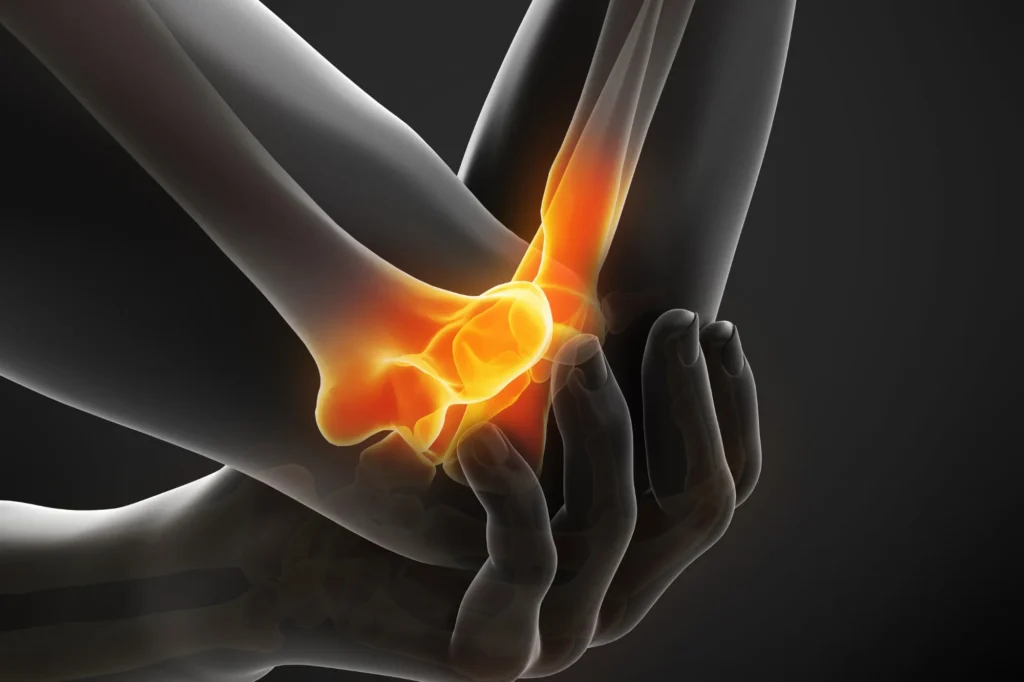
Common Causes of Painful Elbow When Sleeping
In the following subsections, we’ll take a closer look at some of the common causes of nocturnal elbow pain.
Cubital Tunnel Syndrome (Ulnar Nerve Entrapment)
Cubital tunnel syndrome frequently causes nocturnal elbow pain, numbness, and tingling. It occurs when the ulnar nerve, which passes through a narrow tunnel on the inside of the elbow (the cubital tunnel), becomes compressed or irritated. This nerve is responsible for sensation in the little finger and half of the ring finger, as well as controlling some small muscles in the hand. Sleeping with the elbow bent can be an aggravator of this condition because it stretches the ulnar nerve, increasing pressure within the cubital tunnel.
Tendinitis (Tennis Elbow and Golfer’s Elbow)
Tendinitis refers to the inflammation or irritation of a tendon, the thick fibrous cords that attach muscle to bone. In the elbow, two common forms of tendinitis are particularly relevant to nocturnal pain:
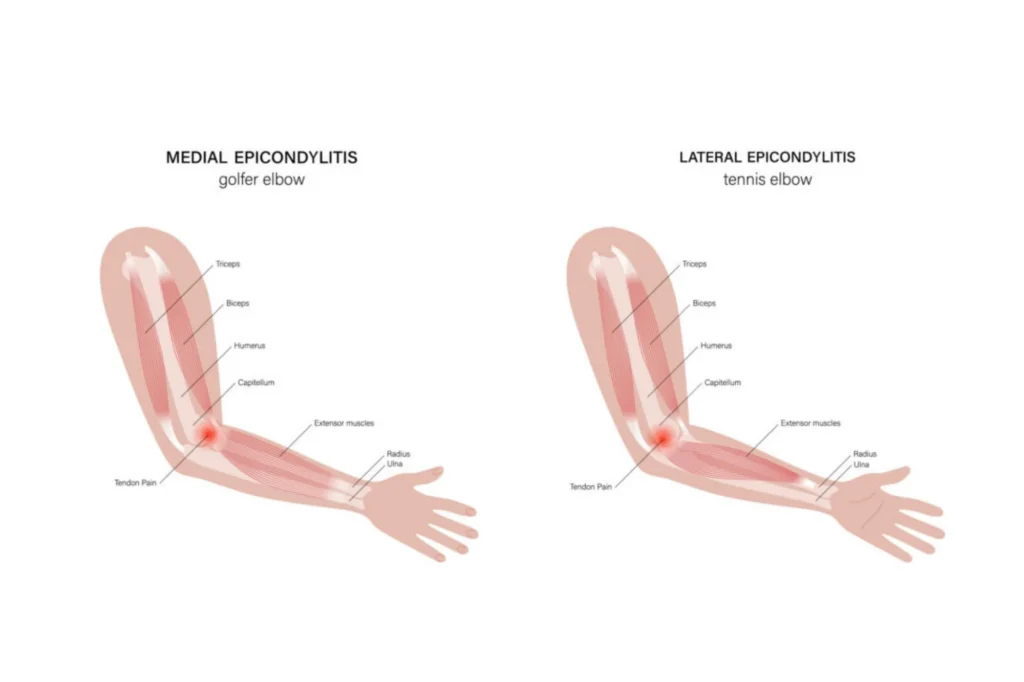
- Tennis Elbow (Lateral Epicondylitis): This condition affects the tendons on the outside of the elbow. It’s often caused by repetitive motions of the wrist and arm, not just tennis. While typically a daytime pain, sleeping positions that put pressure on the outer elbow or keep the wrist extended can exacerbate the inflammation and pain at night.
- Golfer’s Elbow (Medial Epicondylitis): Affecting the tendons on the inside of the elbow, this condition involves the muscles that flex the wrist and fingers and pronate the forearm. Similar to tennis elbow, repetitive strain is the primary cause. Sleeping with the elbow bent or with the wrist flexed can aggravate golfer’s elbow, leading to increased pain and stiffness upon waking.
Biceps Tendinitis
Biceps tendinitis involves inflammation of the biceps tendon, which attaches just below the elbow. Overuse or repetitive stress can lead to inflammation, causing pain that can be felt when extending the arm or during sleep, especially if the arm is in a position that stretches the inflamed tendon. Symptoms may include pain at the front of the elbow, tenderness, and sometimes a clicking sensation.
Olecranon Bursitis
Olecranon bursitis is the inflammation of the bursa located at the tip of the elbow. The olecranon bursa is a thin, fluid-filled sac that acts as a cushion between the olecranon bone and the skin. Direct pressure on the elbow, such as leaning on it for extended periods or sleeping directly on the elbow, can irritate and inflame this bursa, leading to pain, swelling, and tenderness.
Arthritis
Various forms of arthritis can affect the elbow joint, leading to pain that may worsen at night. These include:
- Osteoarthritis: A degenerative joint disease where the cartilage that cushions the ends of bones wears away. This can lead to bone-on-bone friction, pain, stiffness, and reduced range of motion. Nocturnal pain is common as the joint rests and inflammatory mediators accumulate.
- Rheumatoid Arthritis: An autoimmune disease that causes chronic inflammation of the joints. The elbow can be affected, leading to pain, swelling, and stiffness, often worse in the morning or after periods of inactivity.
The Diagnostic Process
Diagnosis for the cause behind elbow pain when sleeping typically involves a combination of a detailed medical history, a physical examination, and, if necessary, imaging studies.
Your doctor may begin by taking a comprehensive medical history. This will include questions about the nature of the pain, sleep patterns, activities, previous injuries, and associated symptoms. During the physical exam, your doctor may check for swelling, redness, or deformities. Range of motion may also be assessed.
Depending on the findings from the history and physical exam, your doctor may recommend imaging studies such as X-rays, magnetic resonance imaging (MRI), or ultrasound to support a diagnosis, assess the severity of the condition, or rule out other issues. If nerve compression is suspected, nerve conduction tests may be performed.
Treatment Options for Nocturnal Elbow Pain
Treatment for a painful elbow when sleeping typically starts with conservative, non-surgical methods. Surgical intervention may be considered for severe conditions or if conservative treatments have failed to provide adequate relief. Specific treatment strategies may differ depending on the condition, the severity, and individual health factors. An experienced elbow specialist can evaluate the injury and help guide the most appropriate treatment path.
Non-Surgical Treatments
Many elbow pain conditions, including those exacerbated by sleep, respond well to conservative management. The goal is to reduce inflammation, alleviate pain, and promote healing. Non-surgical treatment options include the following:
- Rest and Activity Modification: Avoiding activities that aggravate the elbow, along with modifying work tasks, sports, and sleeping positions, can allow inflamed tissues to heal.
- Ice and Heat Therapy: Applying ice packs to the affected area for 15-20 minutes several times a day may help reduce inflammation and pain. Heat therapy, such as a warm compress or shower, can help relax muscles and improve blood flow, which is often beneficial before stretching or for chronic stiffness.
- Nonsteroidal Anti-inflammatory Drugs (NSAIDs): NSAIDs can help reduce pain and inflammation.
- Night Splinting or Bracing: A night splint or brace is designed to keep the elbow in a slightly extended (straightened) position during sleep to prevent the sharp flexion that can compress the ulnar nerve or stretch inflamed tendons. Various types of braces are available, and your doctor or physical therapist can recommend the most appropriate one.
- Physical Therapy (PT): A physical therapist can design a tailored exercise program that aims to strengthen the muscles around the elbow, improve flexibility, and correct biomechanical imbalances.
- Corticosteroid Injections: For certain conditions, your doctor may recommend a corticosteroid injection directly into the affected area for short-term pain relief.
Surgical Treatments
Surgery is typically considered only when other treatments have not provided sufficient relief after several months, or when the underlying condition is severe. The specific procedure depends on the cause of the pain. Many procedures can be performed arthroscopically, a minimally invasive method.
For individuals with cubital tunnel syndrome, surgery may involve relieving pressure on the ulnar nerve by releasing the ligament that forms the roof of the cubital tunnel. In some cases, the nerve may be moved from behind the bony prominence at the elbow to a new position in front of it to reduce the stretching and irritation that occurs when the elbow is bent.
If tendinitis such as tennis elbow or golfer’s elbow is present and a tendon tear or degeneration is identified, the surgeon may remove damaged tissue or repair the tendon. These procedures are often performed arthroscopically or through a small open incision. Chronic or severely painful olecranon bursitis that does not respond to conservative care may require surgical removal of the inflamed bursa.
Post-Surgical Rehabilitation
Following surgery, a structured rehabilitation program, often involving physical therapy, is generally important for restoring strength, flexibility, and function to the elbow. This may include a period of immobilization, followed by progressive exercises to regain range of motion and strength. Adherence to the rehabilitation plan supports optimal long-term outcomes.
Preventive Measures and Lifestyle Adjustments
While elbow pain when sleeping may not be preventable in some cases, certain strategies can support your elbow health. Reducing the risk of nocturnal elbow pain involves a combination of ergonomic adjustments, regular exercise, and mindful habits.
- Optimize Sleeping Position: The most direct way to help prevent nocturnal elbow pain is to avoid sleeping with your elbows sharply bent. Try sleeping on your back with your arms straight at your sides, or use a pillow to support your arm in a slightly extended position. If you are a side sleeper, try to keep your arm from being tucked under your body or pillow in a flexed position.
- Ergonomic Adjustments: Evaluate your workspace and daily activities for ergonomic deficiencies. Ensure your computer keyboard and mouse are positioned to keep your wrists straight and elbows at a comfortable angle. Take frequent breaks to stretch and move.
- Regular Stretching and Strengthening: Incorporate a routine of gentle stretches and strengthening exercises for your forearms, wrists, and shoulders. This helps maintain flexibility, improve muscle balance, and provide better support for the elbow joint. A physical therapist can guide you on appropriate exercises.
- Proper Technique in Sports and Activities: If you participate in sports or activities that involve repetitive arm movements, ensure you are using proper technique and appropriate equipment. For example, in tennis, using a racquet with the correct grip size and string tension can reduce strain on the elbow.
- Warm-Up and Cool-Down: Always warm up before engaging in physical activity and cool down afterward. This prepares your muscles and tendons for activity and helps prevent injury.
Summary
Nocturnal elbow pain is a common symptom that can significantly impair sleep quality and daily function. It is frequently linked to conditions such as cubital tunnel syndrome, tennis elbow, golfer’s elbow, and various forms of tendinitis or arthritis. Diagnosis typically involves a detailed medical history, a thorough physical examination, and may include imaging studies.
Treatment strategies first prioritize conservative approaches, including rest, ice, anti-inflammatory medications, physical therapy, and the use of night splints or braces to maintain a neutral elbow position during sleep. When these measures prove insufficient, surgical interventions may be considered. Beyond treatment, a strong emphasis on preventive measures, including optimizing sleeping positions, making ergonomic adjustments, and engaging in regular stretching and strengthening exercises, supports long-term elbow health.
Frequently Asked Questions
Why does my elbow hurt more at night when I’m sleeping?
Elbow pain can worsen at night due to several factors. Sleeping positions, particularly with the elbow sharply bent, may compress nerves or stretch inflamed tendons. Additionally, during rest, the body’s inflammatory processes may become more noticeable, and the lack of movement can lead to stiffness and increased pain sensation upon waking.
What is cubital tunnel syndrome, and how does it relate to sleeping?
Cubital tunnel syndrome is a condition where the ulnar nerve, which runs along the inside of your elbow, becomes compressed or irritated. Sleeping with your elbow bent for extended periods is a common aggravator.
Can changing my sleeping position help with elbow pain?
Yes, changing your sleeping position can be an effective non-surgical intervention for some patients. Try sleeping on your back with your arms straight, or use a night splint or a rolled towel to keep your elbow in a slightly extended position. This may reduce pressure on nerves and tendons, allowing them to rest and heal.