


For athletes in overhead sports, the elbow is an important yet vulnerable joint. The repetitive, high-velocity motion of throwing places stress on the elbow and may lead to a range of injuries. Whether you are a professional pitcher or a weekend softball player, understanding how to treat elbow pain from throwing supports maintaining elbow health in your sport. In this post, we’ll explore the common causes of throwing-related elbow pain, detail the available treatment options, and outline prevention strategies.
Key Takeaways
- Many throwing-related elbow injuries respond well to non-operative treatment, including rest, ice, medications, and structured physical therapy.
- Surgery (like Tommy John) may be reserved for high-level athletes with complete ligament tears, where conservative treatment fails to provide relief.
- Adhering to pitch count limits, ensuring proper rest, and participating in year-round strength and conditioning can help prevent these injuries.
Understanding the Causes of Elbow Pain from Throwing
Throwing can put the elbow under mechanical stress. During the late cocking and acceleration phases of the motion, the elbow experiences two major forces that act in opposite ways. These forces determine which structures are overloaded and help explain why certain injuries are common in throwing athletes.
Force 1: Valgus Stress on the Medial (Inner) Elbow
As the arm moves forward quickly, the forearm lags behind for a brief moment. This creates a pulling-apart force on the inner side of the elbow, known as valgus stress. The body relies on two structures to resist this stress: the ulnar collateral ligament (UCL) and the flexor-pronator muscle group.
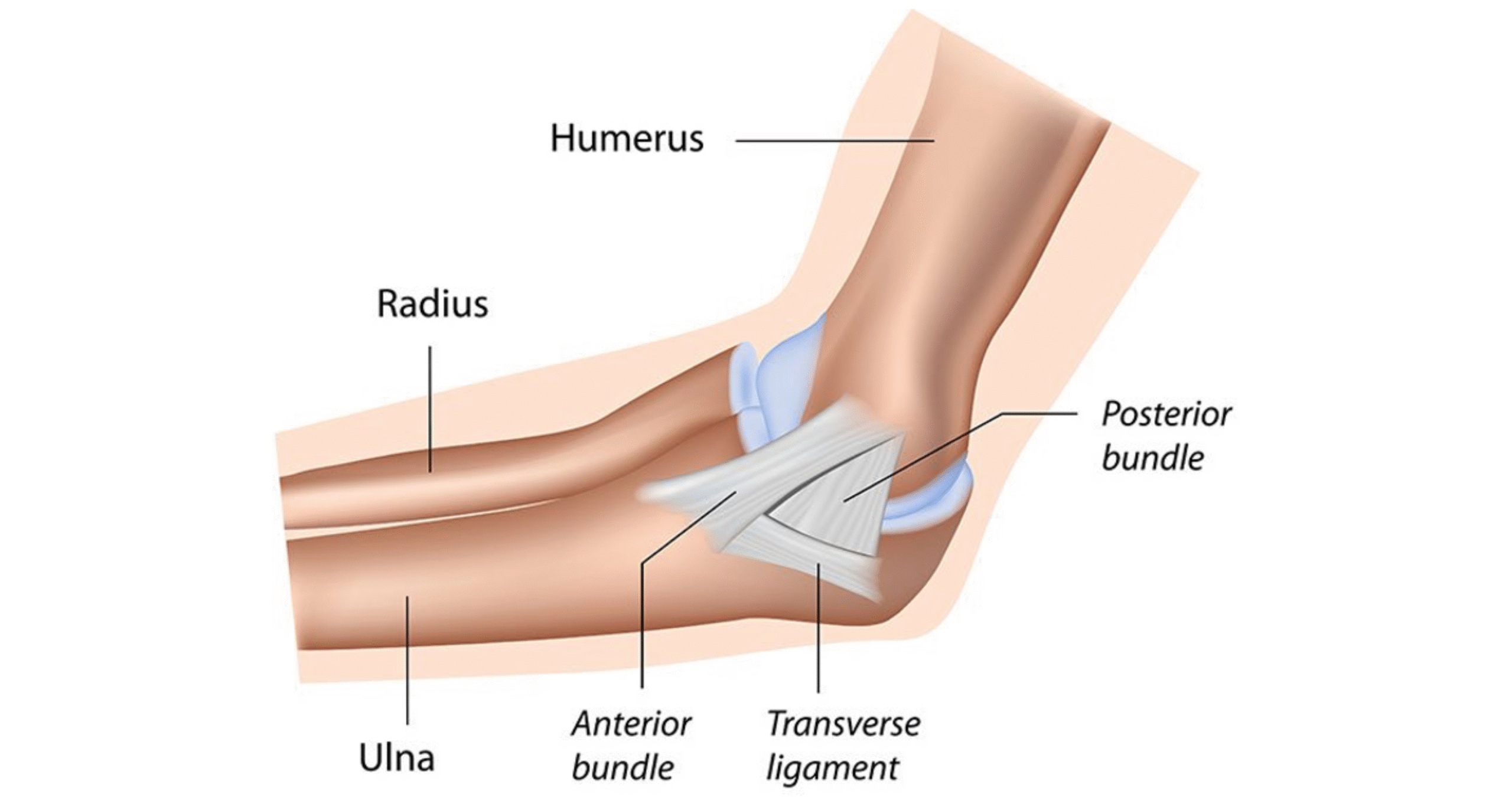
SymptomWhen the flexor–pronator muscles become tired or overused, more stress may be transferred to the UCL. Over time, this can lead to inflammation, small tears, or even a full ligament injury. This force can also irritate the ulnar nerve, which runs close to the inner elbow and may cause tingling or numbness in the ring and little fingers.
Common injuries from valgus stress include:
- UCL sprain or tear
- Flexor–pronator tendinitis or strain
- Ulnar neuritis (cubital tunnel syndrome)
Force 2: Compression on the Lateral and Posterior Elbow
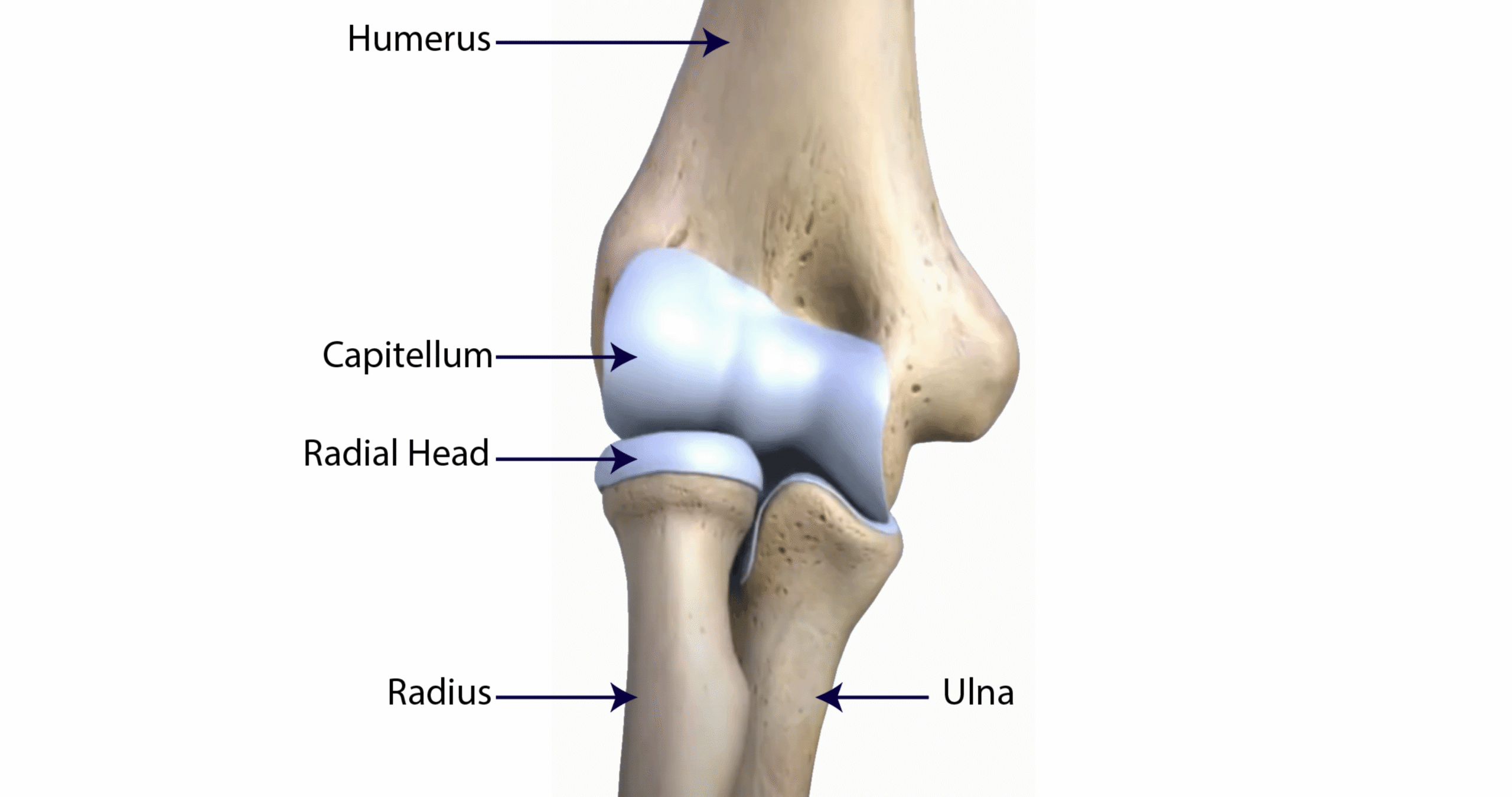
As the arm follows through and the elbow straightens rapidly, the forces shift. Instead of the inner elbow being pulled apart, the outer (lateral) and back (posterior) parts of the elbow are pressed together. This repeated impact can irritate cartilage, bone, or soft tissue, especially when the motion is performed hundreds of times per week.
On the outer side, one of the forearm bones (the radial head) can push against part of the upper arm bone, the capitellum. This repeated contact may irritate the cartilage that protects the joint. Especially in younger throwers, this may result in osteochondritis dissecans (OCD), a condition where a fragment of bone and cartilage becomes damaged and may loosen.
On the back side of the elbow, the olecranon bumps into the upper arm bone during extension. Over time, this may lead to inflammation, stress fractures, or bone spurs. .
Common injuries from compression forces include:
- OCD of the capitellum (especially in young throwers)
- Olecranon stress fracture
- Posterior impingement from bone spurs or inflamed soft tissue
How to Treat Elbow Pain from Throwing: Non-Operative Strategies
Many throwing-related elbow injuries can be successfully managed without surgery. The core of non-operative treatment is a structured, multi-phase approach that focuses on healing, restoring function, and preventing recurrence.
Phase 1: Rest and Acute Management
The first step in how to treat elbow pain from throwing is often rest. The body may need time to heal damaged tissues. A proper diagnosis guides the rest period, which can range from a few weeks for a mild strain to months depending on the injury.
Patients may also be advised to apply ice for 15-20 minutes, several times a day, to reduce inflammation. Your doctor may also recommend nonsteroidal anti-inflammatory drugs (NSAIDs) for pain and inflammation management.
Phase 2: Physical Therapy and Rehabilitation
Physical therapy is frequently a cornerstone of non-operative treatment. While specific steps and timelines may vary, oftentimes, the goal is to safely return the athlete to sport by restoring strength, flexibility, and endurance.
Focus Areas of Rehabilitation:
- Restoring Range of Motion: The therapist works to restore full motion, especially the ability to fully straighten the elbow. Loss of extension is common and may impact throwing mechanics.
- Strengthening the Flexor-Pronator Mass: Strengthening the muscles on the inside of the forearm can help to dynamically stabilize the elbow and reduce stress on the UCL. Exercises may focus on wrist flexion and forearm pronation with light, gradually increasing resistance.
- Scapular and Core Stability (The Kinetic Chain): The power for throwing originates in the legs and core. Weakness in the core or shoulder can force the elbow to compensate, increasing injury risk. Exercises focus on hip rotation, core stability, and scapular control.
- Interval Throwing Program (ITP): The ITP is a structured, progressive program that gradually reintroduces throwing. It starts with light tossing and slowly increases intensity, distance, and number of throws over several months.
Phase 3: Biomechanical Analysis and Correction
Even the best physical therapy may fail to alleviate pain if an underlying mechanical flaw is not corrected. Biomechanical analysis is a tool that aims to identify subtle flaws in the throwing motion that increase stress on the elbow. A specialist can analyze your motion, looking for red flags like “leading with the elbow,” poor trunk rotation, or late forearm pronation. Motor learning involves retraining muscle memory, which takes patience and repetition until the new mechanics become automatic.
Surgical Options for Elbow Pain from Throwing
Surgery is typically considered after conservative treatments have failed over a period of time or in severe cases. The decision to pursue surgery is complex and requires a detailed discussion with your orthopedic surgeon. In the following sections, we’ll take a look at some of the more common surgical procedures for elbow pain from throwing.
Ulnar Collateral Ligament (UCL) Reconstruction (Tommy John Surgery)
Tommy John Surgery replaces the torn UCL with a tendon graft. It may be recommended for high-level overhead athletes with a complete UCL tear who wish to return to competitive throwing and have failed conservative treatment. For many patients, it often takes 12 to 18 months before a full return to competitive throwing is possible.
Ulnar Nerve Transposition
If the ulnar nerve is severely irritated or unstable, a surgeon may perform an ulnar nerve transposition, where the nerve is moved to a new location. It is generally used to relieve chronic compression or stretching of the ulnar nerve that causes persistent numbness and tingling.
Arthroscopic Procedures
For certain conditions, minimally invasive arthroscopic surgery may be used. This approach may remove loose bodies, debride bone spurs, or stabilize damaged cartilage. The goal is to restore range of motion, reduce pain, and prevent further joint damage. It is often an outpatient procedure, where patients may return home the same day as the surgery.
Prevention Strategies: Avoiding Elbow Pain
While some injuries are not preventable, certain strategies can help maintain elbow health. A proactive approach can be an effective way to keep athletes on the field and manage the risks of overhead throwing.
Adherence to Pitching Guidelines
Overuse is a risk factor for throwing injuries. Various organizations have established research-based guidelines to protect young arms. Adherence to age-based daily and weekly pitch count limits is essential. Mandatory rest days are just as important as the pitch count, as the body needs time to repair the microtrauma that occurs during throwing.
Proper Strength and Conditioning
A strong, flexible body is typically better equipped to handle the demands of throwing. Strength and conditioning help build a resilient athlete, focusing on total body strength (legs, core, and back). These large muscle groups generate the majority of the throwing velocity, reducing the burden on the smaller muscles and ligaments of the elbow. Maintaining flexibility in the shoulder and elbow also helps ensure proper mechanics and reduces joint stress.
Focus on Biomechanics
Consistent, efficient throwing mechanics are the ultimate form of injury prevention. The goal is to maximize efficiency and minimize stress. Early instruction from qualified coaches can be helpful, as they should emphasize proper technique over maximum velocity and teach safe throwing patterns. Remember, pain is the body’s warning signal, so communicate it immediately if it occurs.
Summary
Understanding how to treat elbow pain from throwing may require a commitment to a structured, evidence-based approach. For many athletes, recovery involves a period of rest followed by a comprehensive physical therapy program. Prevention, through adherence to pitch count guidelines and proper conditioning, can help maintain elbow joint health. If you are experiencing persistent elbow pain, consider seeking an evaluation from a dedicated elbow specialist.
Frequently Asked Questions
What is the difference between a UCL sprain and a UCL tear?
A UCL sprain is a stretching or minor fraying. A UCL tear is a complete separation. Sprains can generally be treated with rest and physical therapy. A complete tear in a competitive athlete may require surgical reconstruction. The key difference is the degree of instability: a sprain is stable, while a complete tear is unstable.
When should I see an orthopedic specialist for my elbow pain?
Consider seeing an orthopedic specialist with expertise in the elbow if your pain persists despite several weeks of rest and ice, you experience a “pop” during a throw, you have numbness or tingling in your hand or fingers, you cannot straighten your elbow, or your pain limits your ability to perform daily activities.
How long should I rest before throwing again?
The amount of rest depends on the specific injury and its severity. Mild strains may require a few weeks, while more significant ligament or cartilage issues may need months. Your elbow specialist and physical therapist can guide you on when it is safe to begin throwing again.