



Are you suffering from tennis elbow and starting to feel a nagging pain in your shoulder? A common question I receive is: Can tennis elbow cause shoulder pain? While tennis elbow primarily affects the elbow, the condition can occasionally contribute to discomfort in other parts of the arm, including the shoulder. This post will guide you through the biomechanical reasons behind this extended pain, how to distinguish between elbow and shoulder symptoms, and effective ways to alleviate both.
Key Takeaways
- Tennis elbow, characterized by pain and tenderness over the outer aspect of the elbow, can sometimes be associated with discomfort in other parts of the arm, including the shoulder, often due to compensatory movement patterns or muscle overuse rather than direct nerve involvement.
- Symptoms such as weakness with gripping or wrist extension may occasionally be confused with other upper-extremity conditions, which is why a thorough evaluation is important.
- Physical therapy is a treatment option for both tennis elbow and related shoulder pain, emphasizing targeted exercises, posture correction, and preventative strategies to alleviate and prevent pain.
Exploring the Connection: Can Tennis Elbow Lead to Shoulder Discomfort?
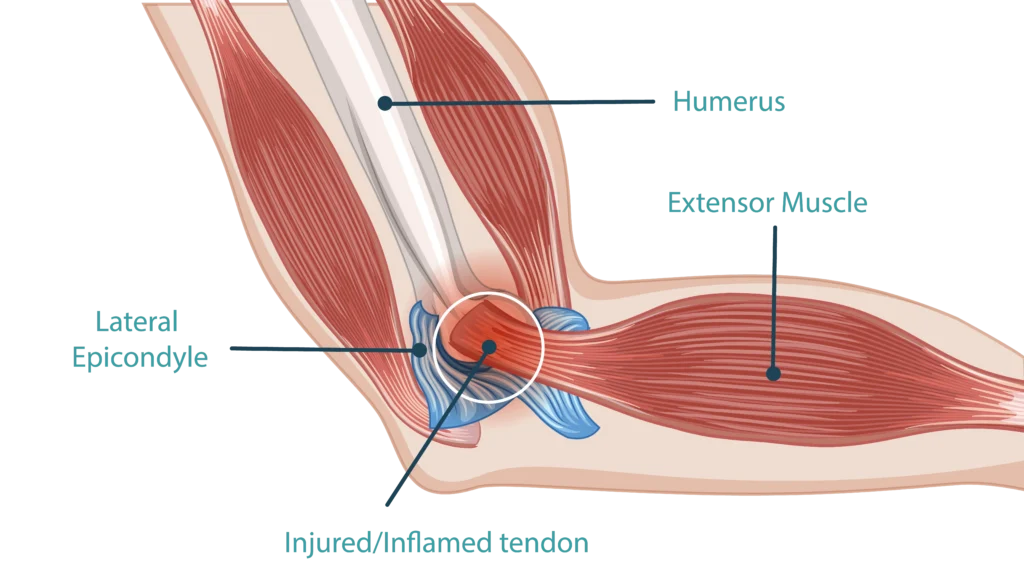
Tennis elbow, or lateral epicondylitis, is not exclusive to those who play tennis. In fact, anyone who engages in repetitive wrist movements, be it gardeners, home handymen, or even computer users, could find themselves dealing with this discomfort. Tennis elbow typically involves irritation or degeneration of the tendons that attach forearm muscles to the outside of the elbow, most commonly affecting the extensor tendons responsible for wrist extension.
But how can this pain extend to the shoulder? The pain from tennis elbow can extend beyond the elbow to the wrist and may even be misinterpreted as shoulder pain. The sensation of pain from tennis elbow varies and can become more pronounced during rest or certain movements, which might lead to an erroneous belief that the discomfort originates from the shoulder rather than the elbow. If you have any questions about your symptoms, seek out your orthopedic surgeon.
The Role of the Extensor Carpi Radialis Brevis
Grasping the connection between tennis elbow and shoulder discomfort demands a solid understanding of the extensor carpi radialis brevis muscle’s role. This muscle often takes center stage when it comes to the cause of tennis elbow.
The extensor carpi radialis brevis tendon, which attaches to the lateral epicondyle of the elbow, is most likely affected by tennis elbow. This muscle comes into play when you:
- Extend your wrist
- Grip objects tightly
- Lift heavy objects
- Perform repetitive wrist movements
When this muscle is overworked, it can lead to inflammation and pain, setting the stage for tennis elbow.
From Elbow Joint to Shoulder Blade
Comprehending the transfer of pain from the elbow to the shoulder necessitates a fundamental grasp of the arm’s structure. The elbow joint consists of three bones: the humerus, also known as the upper arm bone, the ulna on the pinky finger side, and the radius on the thumb side. These bones work together to provide mobility and support in the arm.
Pain from tennis elbow is usually localized to the outer part of the elbow and forearm. However, some people notice discomfort that seems to extend into the upper arm or shoulder. In many cases, this occurs because people subconsciously change how they move their arm to avoid elbow pain, placing additional strain on the shoulder muscles.
Unraveling the Symptoms: Is Your Shoulder Pain Related to Tennis Elbow?
How do you discern if your shoulder pain is linked to tennis elbow? The answer resides in the ability to identify common tennis elbow symptoms and understand when these may be mistaken for shoulder discomfort.
Tennis elbow presents with the following symptoms:
- Pain, burning, or ache along the outside of the forearm and elbow, which might be misinterpreted as shoulder pain
- Tenderness on the outside of the elbow where the injured tendons attach to the bone, contributing to elbow and potentially perceived shoulder discomfort
- Weakness in grip, which may be incorrectly attributed to shoulder pain
Diagnosis is usually based on symptoms, physical examination, and specific tests that reproduce pain with wrist extension or gripping.
When Lateral Epicondylitis Mimics Shoulder Ailments
Lateral epicondylitis, commonly known as tennis elbow, involves inflammation at the end of the outer elbow. However, symptoms of tennis elbow, such as tennis elbow pain, include:
- pain or weakness when grasping
- difficulty lifting objects
- pain when extending the wrist
- pain when twisting the forearm
These can be similar to those experienced with shoulder conditions, potentially leading to misdiagnosis.
Hence, precise diagnosis, distinguishing between shoulder conditions and tennis elbow, is key to successful treatment. Misdiagnosis can lead to inappropriate treatment, prolonging recovery time and potentially exacerbating the condition.
How Repetitive Movements Tie Elbow and Shoulder Pain Together
Delving further into the correlation between tennis elbow and shoulder pain, the role of repetitive movements can’t be overlooked. These are often the main culprits behind the development of tennis elbow, and they can also have an impact on the shoulder.
The repetitive motion of the forearm muscles, which attach to the outside of the elbow, is the cause of tennis elbow. This condition is often associated with activities such as playing tennis or other repetitive arm movements. Over time, these repetitive motions may also affect how the shoulder muscles are used, which can contribute to discomfort in the upper arm or shoulder in some individuals.
In addition, when tennis elbow leads to a weakened elbow and reduced range of motion, shoulder pain may occur as the body attempts to compensate for the impairment.
Physical Therapy: A Dual Approach to Treating Tennis Elbow and Shoulder Pain
Once tennis elbow manifests and possibly leads to shoulder pain, the need for treatment becomes paramount. Physical therapy stands out as a comprehensive approach to address both conditions concurrently.
Physical therapy aims to treat tennis elbow and related shoulder pain through a combination of hands-on care, education, and tailored movement exercises. Physical therapists employ treatments such as manual therapy, specialized exercises, and modalities like ice or heat therapy, targeting muscle weaknesses that contribute to tennis elbow. To recover muscle strength and prevent further injury, therapists may prescribe exercises that progress from passive to active, and ultimately incorporate weights or resistance bands.
Strengthening Exercises for Forearm Muscles
In the face of tennis elbow, employing strengthening exercises for forearm muscles can be transformative. Not only do they help alleviate the symptoms of tennis elbow, but they also support shoulder health.
Graded strengthening exercises have been shown to have potential effects on alleviating tennis elbow by reinforcing the muscles responsible for wrist and finger extension. Performing a finger stretch with a rubber band, where fingers are spread apart against the resistance, helps in fortifying the forearm muscles.
Moreover, wrist curls, executed with the palm facing both upwards and downwards using a weight or exercise band, serve to specifically target and enhance the strength of the forearm muscles.
Posture Correction to Relieve Upper Arm Stress
Correcting posture is another facet of physical therapy when addressing tennis elbow and shoulder pain. By adopting appropriate postures, one can relieve upper arm stress and alleviate pain.
Poor shoulder or upper-back posture can place additional strain on the muscles of the shoulder and arm, which may contribute to discomfort in the elbow and surrounding areas. Physical therapy helps patients adopt proper posture through education and targeted exercises and stretches, alleviating pain. Exercises like elbow curls, forearm pulls, and isometric pulls may be effective in strengthening muscles for better upper arm posture.
Preventative Strategies to Keep Pain at Bay
Although treatment options are important, averting the condition is always superior to healing. There are several strategies that can help prevent tennis elbow and, in turn, reduce associated pain in the shoulder.
Gripping and squeezing a soft object like putty or a small rubber ball can aid in strengthening the muscles related to tennis elbow, which also supports shoulder health by maintaining balanced muscle forces.
Keeping your arms flexible and strong is a preventative measure to protect against the development of tennis elbow. Additionally, using the correct equipment, especially in racquet sports, is helpful in preventing strains that can lead to tennis elbow, helping preserve overall joint health, including the shoulders.
Lastly, performing adequate warm-up exercises before physical activity can help prevent tennis elbow and related shoulder pain by preparing muscles and tendons for the upcoming strain.
Understanding the Differences: Tennis Elbow vs. Golfer’s Elbow
Although our primary focus has been tennis elbow, it’s worth mentioning a comparable condition: golfer’s elbow. Understanding the differences between these two conditions can provide further insight into the nature of your pain.
Tennis elbow affects the outer area of the elbow, while golfer’s elbow impacts the inner elbow. The symptoms of these conditions can be quite similar, making it easy to confuse one with the other. Pain when closing the hand in a grip could indicate golfer’s elbow, whereas pain when straightening the fingers might suggest tennis elbow. Interestingly enough, both conditions can simultaneously occur, particularly in activities that heavily use both the lateral and medial sides of the forearm. If you are experiencing these symptoms, connect with an orthopedic specialist for a comprehensive evaluation.
Summary
The musculoskeletal link between tennis elbow and shoulder pain is a complex issue. Pain from tennis elbow can sometimes extend into the forearm or wrist and may occasionally be mistaken for discomfort originating from the shoulder.
From physical therapy to lifestyle changes and preventative measures, there are various ways to address these conditions and prevent further injury. Ultimately, the key lies in listening to your body, seeking professional help when necessary, and staying proactive in maintaining your joint health.
Frequently Asked Questions
Can tennis elbow cause your whole arm to hurt?
Tennis elbow can sometimes cause pain that radiates into the forearm or upper arm, though symptoms usually remain centered around the outside of the elbow. Less commonly, people may experience symptoms in both arms.
What is tennis elbow, and how is it related to shoulder pain?
Tennis elbow is typically caused by overuse or degeneration of the tendons that attach the forearm muscles to the outside of the elbow, often from repetitive gripping or wrist movements. This condition can lead to pain that may also affect the shoulder.
How is tennis elbow diagnosed?
Tennis elbow is usually diagnosed based on symptoms, physical examination, and tests that reproduce pain with gripping or wrist extension.
What are some preventative measures for tennis elbow?
To prevent tennis elbow, it’s important to strengthen forearm muscles, use proper equipment in racquet sports, and do warm-up exercises before physical activity. These steps can reduce the risk of developing this condition.