


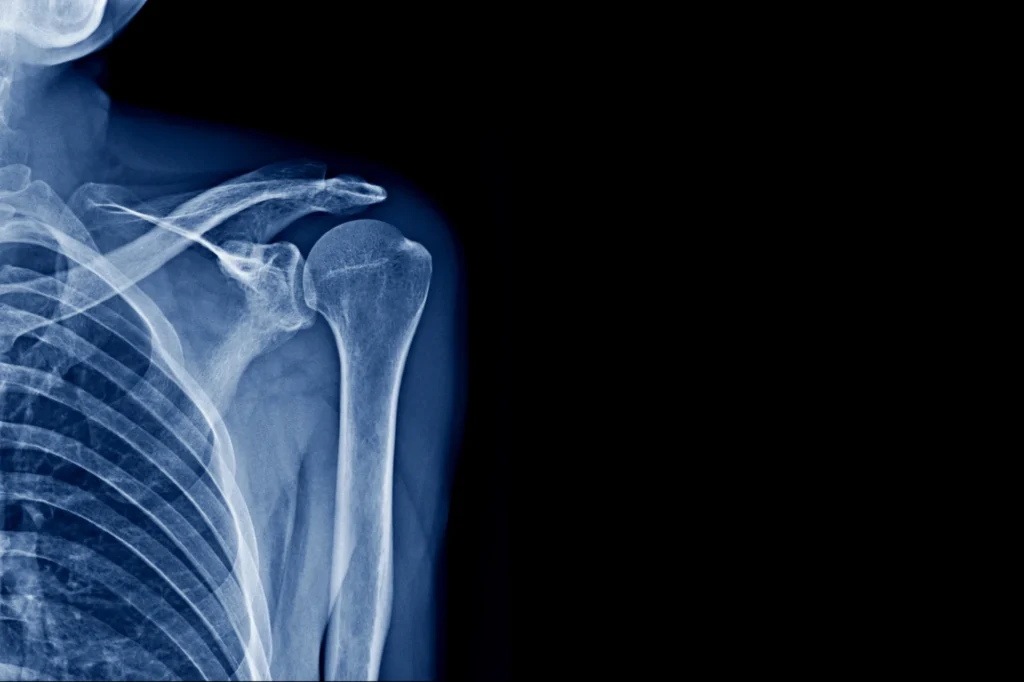
The shoulder is one of the most complex and mobile joints in the human body. This complexity, however, also makes it vulnerable to injury. A broken shoulder refers to a fracture in one of the three bones that make up the shoulder joint. These bones include the clavicle (collarbone), the scapula (shoulder blade), and the proximal humerus (the top part of the upper arm bone). Understanding the injury, the treatment options, and the recovery process is the first step toward healing.
Key Takeaways
- The term “broken shoulder” typically means a fracture of the clavicle, scapula, or proximal humerus.
- Accurate diagnosis, often involving X-rays and sometimes a CT scan, determines the severity of the break and guides the recommended treatment path.
- Many shoulder fractures, especially non-displaced ones, heal well with non-surgical treatment. This usually involves immobilization in a sling and a structured physical therapy program.
- Displaced or unstable fractures may necessitate surgery. The goal is to realign the bone fragments and stabilize them.
Anatomy of a Broken Shoulder
To understand a broken shoulder, it helps to know the anatomy surrounding it. The shoulder is a ball-and-socket joint. The “ball” is the head of the humerus. The “socket” is the glenoid, a part of the scapula.
The three bones that may be involved in a shoulder fracture are:
- Clavicle (Collarbone): This long, slender bone connects the sternum (breastbone) to the shoulder blade. It acts as a strut to keep the shoulder in the correct position.
- Scapula (Shoulder Blade): This is a large, flat, triangular bone. It has several parts, including the glenoid (the socket), the acromion (the roof), and the coracoid process.
- Proximal Humerus: This is the top section of the upper arm bone. It includes the humeral head, which forms the ball of the joint.
Causes and Symptoms of a Broken Shoulder
The mechanism of injury often dictates which bone is affected. Causes of a broken shoulder may include:
- Falls: Falling directly onto the shoulder or onto an outstretched arm is a common cause of shoulder fractures.
- Motor Vehicle Accidents (MVAs): High-impact collisions can generate massive forces. Scapula fractures are frequently associated with high-energy trauma.
- Sports Injuries: Direct contact sports or activities like skiing and cycling can lead to a broken shoulder.
Recognizing the Symptoms
If you have a broken shoulder, you will likely experience immediate and intense symptoms.
- Severe Pain: The pain is often sharp and localized to the shoulder area.
- Swelling and Bruising: Swelling usually develops quickly. Bruising may spread down the arm or across the chest.
- Inability to Move the Arm: You may find it impossible or extremely painful to lift or move the arm.
- Deformity: A visible bump, a sag, or an abnormal contour of the shoulder may be present.
- Grinding Sensation (Crepitus): You might feel or hear a grinding noise when attempting to move the shoulder.
Types of Broken Shoulder Fractures
Shoulder fractures can be classified based on the bone involved and the pattern of the break. This classification helps guide the treatment plan.
Proximal Humerus Fractures
These are fractures of the upper arm bone near the shoulder joint. They are common, especially in older patients with osteoporosis. The Neer classification system is often used to describe these breaks. It divides the proximal humerus into four segments or “parts.”
- Non-Displaced Fractures: The bone is cracked, but the pieces remain in good alignment. These fractures are the most common type.
- Displaced Fractures: The bone fragments have shifted significantly out of their normal position.
- Multi-Part Fractures: The bone is broken into three or four separate pieces. These are complex injuries that may disrupt the blood supply to the humeral head.

Clavicle Fractures (Broken Collarbone)
Clavicle fractures are also very common, and are typically classified based on their location.
- Middle Third Fractures: Most clavicle fractures occur in the middle section.
- Distal Third Fractures: These occur near the shoulder joint (acromioclavicular joint). They can sometimes be more unstable and may require surgical fixation.
- Medial Third Fractures: These are near the sternum (sternoclavicular joint). They are the least common type.
Scapula Fractures (Broken Shoulder Blade)
Scapula fractures usually result from massive, high-energy trauma. Because the scapula is protected by a large amount of muscle, a fracture here suggests a severe injury.
- Scapular Body Fractures: These are breaks in the main, flat part of the bone.
- Glenoid Fractures: These involve the socket of the shoulder joint. They can affect the stability and smooth movement of the joint.
- Scapular Neck/Spine Fractures: These involve the bony projections of the shoulder blade.
Diagnosis: What to Expect
The diagnostic process is generally straightforward, aiming to determine the exact nature of the fracture. Your doctor will first ask about the injury and may assess your symptoms and medical history. A careful physical examination follows, where your doctor checks for “tenting” of the skin, nerve function, and tenderness.
Imaging supports the diagnosis and helps plan treatment. For a fracture, standard X-rays are typically the primary diagnostic tool. They provide clear images of the bone structure. Multiple views are taken to show the fracture pattern and displacement. A CT scan may be ordered for complex fractures. It provides a detailed, three-dimensional view of the bone fragments. This level of detail can be important for surgical planning.
Treatment Options for a Broken Shoulder
The treatment for a broken shoulder depends on several factors. These include the type of fracture, the degree of displacement, the patient’s age, and their overall health and activity level. An experienced shoulder specialist can evaluate the injury and help guide the most appropriate treatment path.
Non-Surgical Treatment
Many shoulder fractures can be treated successfully without an operation. Non-surgical treatments may include:
- Immobilization: The arm is placed in a sling or a shoulder immobilizer. This keeps the bone fragments still.
- Pain Management: Medications may be used to control pain and inflammation. This may include over-the-counter options like acetaminophen or NSAIDs.
- Early Motion: For many fractures, early, gentle motion is encouraged. This is often done with pendulum exercises. The goal is to prevent the shoulder from becoming stiff.
- Physical Therapy: For many fractures, early, gentle motion is encouraged. The goal is to prevent the shoulder from becoming stiff. Once the fracture shows signs of healing, a formal physical therapy program may begin, focusing on restoring range of motion and building strength.
Surgical Treatment
Surgery is typically reserved for fractures that are significantly displaced or unstable. Procedures that may be considered include the following:
- Open Reduction and Internal Fixation (ORIF): In this procedure, the surgeon makes an incision to access the fracture site. They then “reduce” (realign) the bone fragments into their correct anatomical position. Plates, screws, or wires may be used to hold the fragments in place.
- Intramedullary Nailing: For some proximal humerus fractures, a rod may be placed down the center of the bone.
- Shoulder Replacement (Arthroplasty): In severe cases, a shoulder replacement may be the recommended option. There are two primary types of shoulder replacement procedures:
- Total Shoulder Arthroplasty: Both the ball and the socket are replaced.
- Reverse Total Shoulder Arthroplasty: This is often used for older patients with complex fractures. It reverses the ball and socket positions, which allows the deltoid muscle to power the arm.
Following surgery, patients will be guided through a personalized rehabilitation plan to help restore strength and flexibility, supporting an optimal recovery.
Summary
A broken shoulder can involve the clavicle, scapula, or proximal humerus and may range in severity. Accurate diagnosis helps determine the best treatment path. Many fractures heal without surgery using a sling, pain control, and guided physical therapy. Surgery is typically reserved for displaced or unstable fractures that need realignment for proper healing. With proper treatment and dedication to recovery, many patients can return to their normal daily activities.
Frequently Asked Questions
How long does it take for a broken shoulder to heal?
Timelines may vary depending on the patient and the injury complexity. The initial bone healing process usually takes about six to twelve weeks. Regaining full strength and range of motion often takes much longer, however. It is common for a patient to spend three to six months in a formal rehabilitation program. Returning to full, unrestricted activity may take up to a year or longer, especially after a complex fracture or surgery.
Will I need surgery for my broken shoulder?
Not necessarily. Many shoulder fractures, particularly non-displaced clavicle and proximal humerus fractures, heal without surgery. Surgeons typically recommend surgery when the bone fragments are significantly displaced, the fracture is unstable, or the joint surface is involved. Your doctor may use imaging to determine if surgery is the best option for your specific injury.
When can I stop wearing my sling?
The duration of sling use depends on the type and stability of your fracture. For non-surgical treatment, a sling is typically worn for comfort and protection for a set period of time. For surgical cases, the sling protects the repair. It is usually worn until the surgeon clears you to begin active motion.