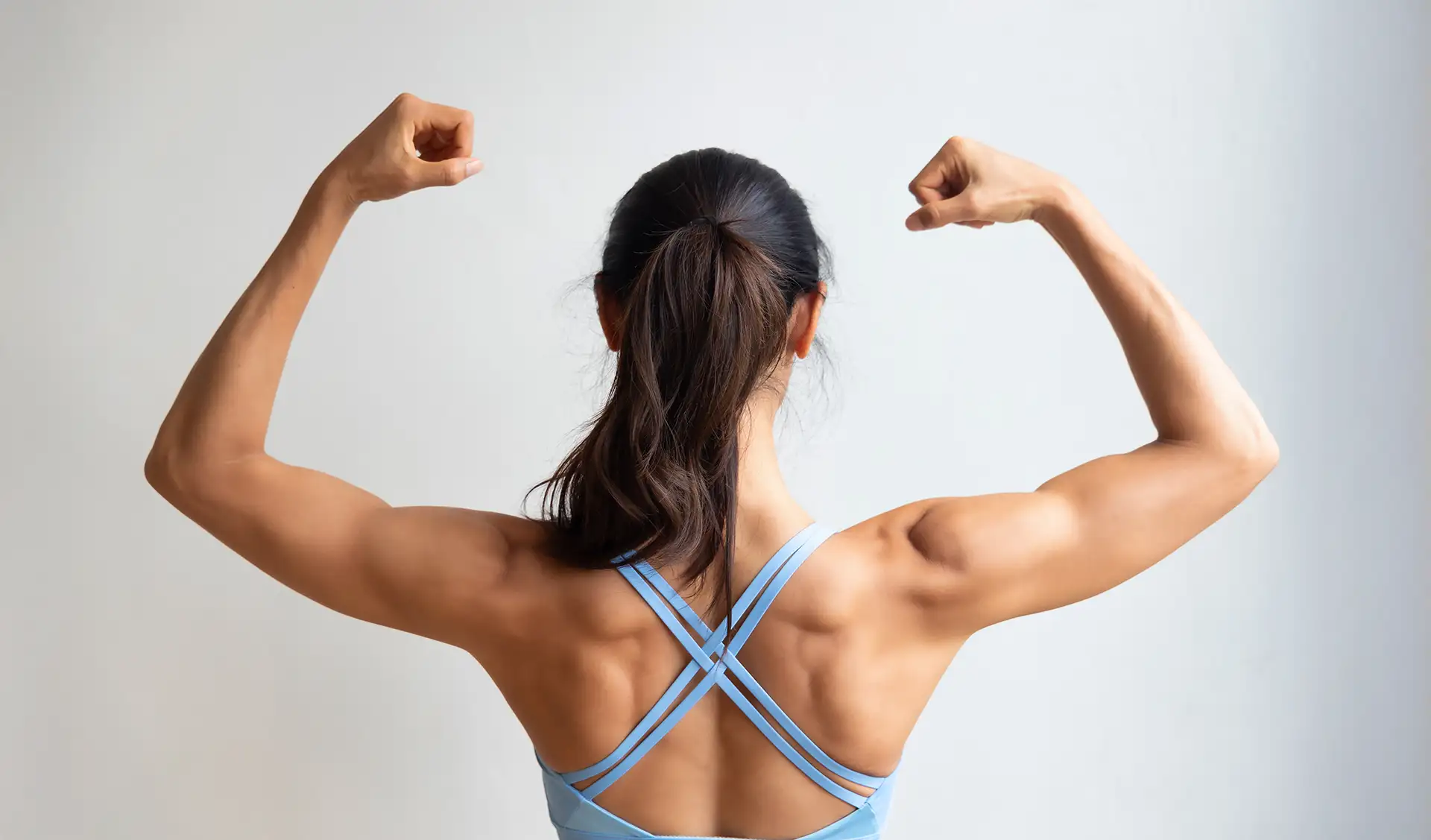


Knowing the muscles around the shoulder is important for understanding shoulder health. These muscles are responsible for a range of movements, from simple daily activities to complex athletic maneuvers. In this post, we’ll explore the key muscles around the shoulder, their functions, and how they contribute to shoulder mechanics.
Key Takeaways
- The shoulder’s design enables a wide range of motion, supporting arm movements like lifting, rotating, and stabilizing.
- Core muscle groups, including the rotator cuff, deltoid, and pectoralis major, play essential roles in shoulder movement and joint integrity.
- Preventing shoulder injuries often involves incorporating stretching and strengthening exercises, along with using proper techniques during physical activities.
Overview of the Shoulder
The shoulder is a complex joint that provides exceptional mobility. It connects the upper limb to the trunk and is involved in almost every movement of the arm. This mobility stems from the ball-and-socket configuration of the joint, which allows the shoulder to move in multiple directions.

Shoulder muscles are strategically positioned around the upper arm, where they attach to the bones of the scapula, humerus, and clavicle via tendons. These muscles are composed of elastic fibers, which contribute to their flexibility and ability to withstand the demands of daily activities.
Each shoulder muscle plays a significant role in the overall function of the shoulder, whether it’s stabilizing the joint or facilitating various arm movements. They also support upper body strength and posture. A clear understanding of the muscles is valuable for anyone looking to protect shoulder function and prevent injury.
Key Muscles of the Shoulder
Several muscle groups are particularly important for both movement and stability. Each group has a specific function contributing to overall shoulder performance. In the following subsections, we’ll take a look at the rotator cuff, the deltoid, and the pectoralis major.
Rotator Cuff Muscles
The rotator cuff forms a stabilizing sleeve around the shoulder joint and supports controlled motion. It includes four muscles:
- Supraspinatus
- Infraspinatus
- Teres minor
- Subscapularis
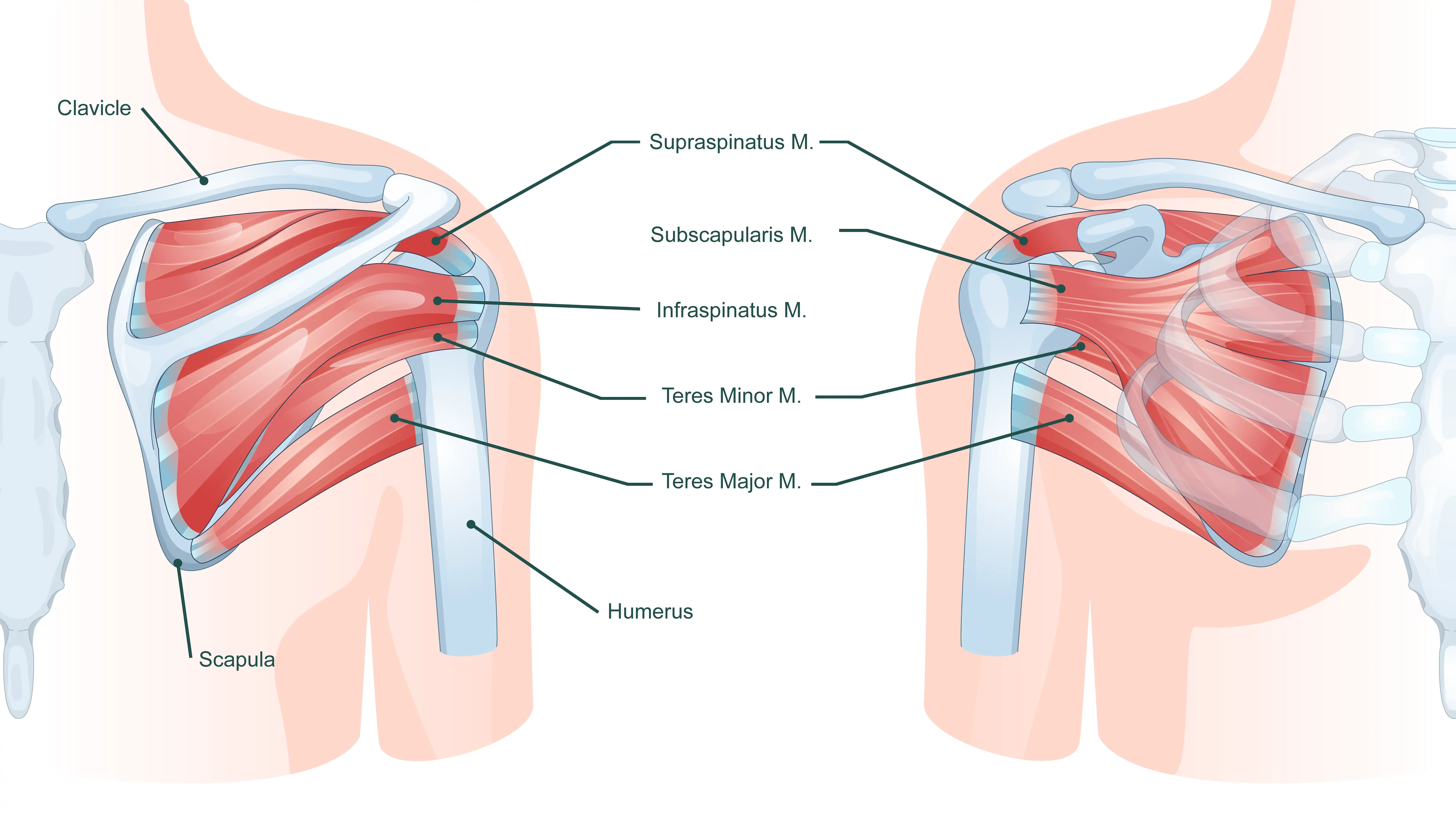
Each uniquely contributes to shoulder stability and movement. The supraspinatus abducts the humerus up to about 30 degrees and helps stabilize the glenohumeral joint, used to initiate arm lifting.
The infraspinatus muscle externally rotates the humerus, aiding actions like reaching behind the back or throwing. The teres minor also aids in external rotation and joint stabilization.
Located on the front of the shoulder blade, the subscapularis muscle internally rotates and adducts the humerus, which is essential for movements that bring the arm toward the body.
Together, these four muscles coordinate to maintain joint integrity and support many shoulder movements.
Deltoid Muscle
The deltoid is the largest and most visible shoulder muscle, made up of three distinct segments: the anterior (front), middle, and posterior (rear).
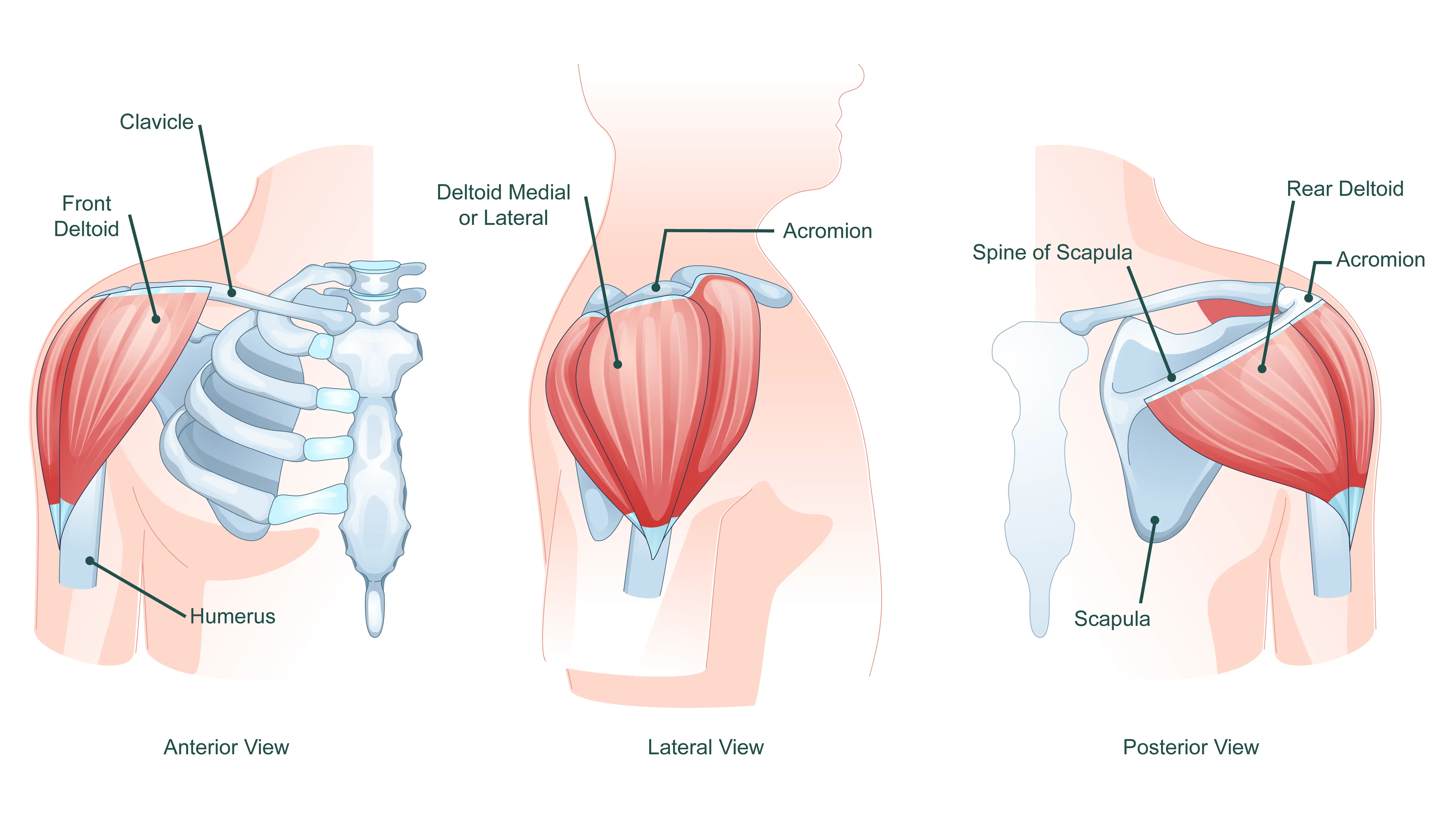
Each part serves a specific function:
- Anterior deltoid: Enables arm flexion and internal rotation, enabling forward lifting.
- Middle deltoid: Controls arm abduction, especially lifting the arm to the side.
- Posterior deltoid: Supports arm extension and external rotation, allowing backward and outward movements.
Together with the rotator cuff, the deltoid contributes to shoulder power and range of motion during activities like lifting and throwing.
Pectoralis Major
The pectoralis major is a broad, fan-shaped muscle that spans the upper chest. It is composed of three heads: the clavicular (from the clavicle), sternocostal (from the sternum), and abdominal head.

This muscle enables arm adduction and internal rotation, key for pushing and lifting motions. Its three heads work together to generate powerful forward and inward arm movements.
Supporting Muscles of the Shoulder
Several supporting muscles play key roles, all of which contribute to the shoulder’s stability and movement.
Pectoralis Minor
Lying beneath the pectoralis major, this muscle anchors the scapula to the thoracic cage and draws it toward the front of the body, helping stabilize the shoulder blade during movement.
Subclavius
This small muscle beneath the clavicle helps stabilize the collarbone, especially during dynamic upper-body activities.
Serratus Anterior
The serratus anterior muscle protracts the scapula, pulling it forward around the rib cage, and holds it firmly against the thoracic wall. This muscle is important for actions like pushing, punching, and overhead movements like lifting or reaching.
Levator Scapulae
This muscle elevates the scapula, assists in lateral neck flexion, and rotates the scapula to tilt the glenoid cavity downward. It supports shrugging and head-tilting motions.
Rhomboid Muscles
Comprising the rhomboid major and minor, these muscles retract and elevate the scapula. They help maintain proper scapular alignment, which is essential for shoulder function and injury prevention.
Common Shoulder Injuries
Given its range of motion and frequent use, the shoulder is prone to injury, particularly from overhead or repetitive activity. These injuries can range from mild strains to severe tears and may impair strength and movement.
Early recognition of symptoms and modifying activity can help reduce injury severity. If pain is persistent or accompanied by other symptoms, consider seeking medical advice. An experienced shoulder specialist can evaluate the injury and help guide the most appropriate treatment plan. In the following subsections, we’ll review some of the most common shoulder injuries.
Rotator Cuff Injuries
Rotator cuff injuries often result from overuse or acute trauma. These injuries can be classified into partial-thickness and full-thickness tears.
Rotator cuff conditions include shoulder impingement, subacromial bursitis, and tears. Severe tears may necessitate surgical intervention.
Chronic overuse, particularly in sports or jobs involving repetitive lifting, can lead to these conditions. Strengthening and conditioning the shoulder can help reduce risk and improve recovery.
Bursitis and Tendonitis
Shoulder bursitis and tendonitis are inflammatory conditions that often result from overuse or repetitive movement. They may cause swelling, discomfort, and decreased range of motion. Both conditions can impact shoulder function and may require physical therapy, rest, medication, and in some cases, surgical intervention for recovery.
Frozen Shoulder
Adhesive capsulitis, or frozen shoulder, is characterized by stiffness and pain. It progresses through three stages: freezing, frozen, and thawing, each with distinct characteristics.
Frozen shoulder often leads to significant restriction in shoulder mobility, making it difficult for individuals to perform everyday activities. Treatment typically involves stretching and physical therapy to restore movement, and in severe cases, surgery may be necessary.
Preventing Shoulder Injuries
Incorporating shoulder health practices such as stretching, strengthening, and using proper technique during activity can help reduce the risk of shoulder injuries.
Practice dynamic stretches before activity and static stretches afterward to improve flexibility and circulation. Stretching should be consistent and target the entire shoulder. Resistance training with bands can increase shoulder strength. If exercises become easy, gradually increase resistance or repetitions.
Proper technique during physical activities helps prevent shoulder injuries. Practicing correct form and body mechanics helps reduce strain on tendons and muscles, especially during high-impact or repetitive motions.
These preventive strategies can help reduce the risk of injury and protect shoulder health.
Summary
Understanding the anatomy and function of the shoulder muscles is important for maintaining shoulder health and preventing injuries. By knowing the roles of the key and supporting muscles, recognizing common injuries, and implementing preventive measures such as stretching, strengthening exercises, and proper techniques, you can improve your shoulder health and reduce your risk of injury.
Frequently Asked Questions
What are the key muscles involved in shoulder movement?
The primary muscles that facilitate shoulder movement include the rotator cuff muscles, the deltoid, and the pectoralis major, which work together to provide stability and strength.
What is the primary function of the rotator cuff muscles?
The primary function of the rotator cuff muscles is to stabilize the shoulder joint while allowing for a range of arm movements, such as abduction and rotation. This stabilization is essential for maintaining shoulder health and function.
How can I prevent shoulder injuries during physical activities?
To help prevent shoulder injuries, focus on employing proper techniques, performing dynamic warm-ups, and incorporating regular stretching and strengthening exercises. This proactive approach can help keep your shoulders safe during physical activities.
What are common symptoms of rotator cuff injuries?
Common symptoms of rotator cuff injuries are shoulder pain, weakness, and difficulty with arm movement, particularly when lifting or reaching. If you experience these symptoms, it may be beneficial to seek medical evaluation.
What is frozen shoulder, and how is it treated?
Frozen shoulder, or adhesive capsulitis, is a condition marked by stiffness and pain in the shoulder, progressing through three stages: freezing, frozen, and thawing. Treatment primarily focuses on physical therapy for movement restoration, while surgery may be considered in severe cases.