


Reaching for a cup of coffee, lifting a child, or bending your arm to check your phone can become unexpectedly painful when elbow discomfort sets in. Elbow pain when bending is a common complaint that affects people across all age groups and activity levels. Understanding the potential causes behind this discomfort and knowing when to seek medical evaluation can help you make informed decisions about your care.
Key Takeaways
- Elbow pain during bending can signal issues with tendons, ligaments, bones, or nerves.
- Common causes include tendinitis, arthritis, ligament injuries, and nerve compression.
- Many cases may respond well to conservative treatment such as rest, physical therapy, and activity modification. Surgery may be considered for severe injuries or persistent pain despite non-surgical treatment.
The Elbow Joint: A Brief Overview
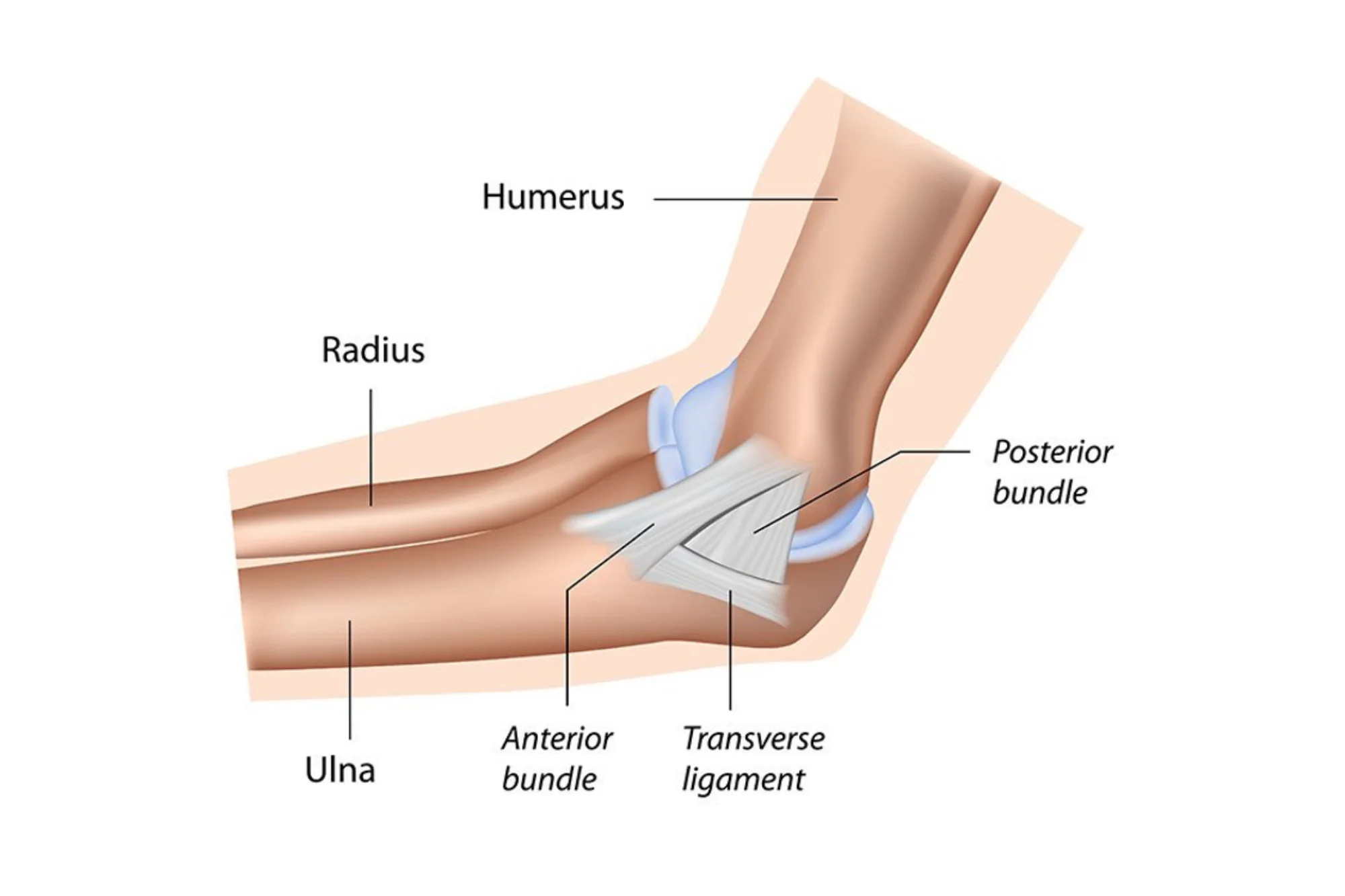
The elbow consists of three bones: the humerus in the upper arm, and the radius and ulna in the forearm. These bones form a hinge joint that allows you to bend and straighten your arm while enabling rotational movements.
Surrounding these bones are muscles, tendons, ligaments, and cartilage that provide stability and facilitate movement. Ligaments on both sides of the elbow provide stability, while tendons connect muscles to bones. Because the elbow plays a key role in both forceful activities and delicate tasks, it is vulnerable to various forms of stress and injury.
Common Causes of Elbow Pain When Bending
Lateral Epicondylitis (Tennis Elbow)
Despite its nickname, tennis elbow affects many people who have never touched a tennis racket. This condition develops when the tendons that attach to the outer part of the elbow become irritated through overuse.
Individuals with tennis elbow typically experience pain on the outside of the elbow that may radiate down the forearm. The discomfort often worsens when bending the elbow while gripping or lifting objects. Simple activities like shaking hands or turning a doorknob may become surprisingly painful.
Medial Epicondylitis (Golfer’s Elbow)
Golfer’s elbow is similar to tennis elbow, but it affects the tendons on the inner side of the elbow. This condition results from overuse of the wrist flexor muscles and tendons. Repetitive wrist flexion, gripping, or throwing motions can lead to tendon inflammation.
Pain typically localizes to the inner elbow and may extend down the inner forearm. Bending the elbow while gripping often aggravates the symptoms. Many people notice weakness in their grip and increased discomfort with activities involving lifting with the palm up.
Elbow Osteoarthritis
As we age, the protective cartilage that cushions our joints can gradually wear away. The smooth cartilage becomes rough and thin, and may cause the bones to rub together with movement. Elbow osteoarthritis can make bending and straightening the arm uncomfortable, particularly at the end ranges of motion. Many people notice morning stiffness that improves with gentle activity. The joint may feel stiff after inactivity and can develop a grinding sensation during movement.
Rheumatoid Arthritis
Unlike osteoarthritis, rheumatoid arthritis is an autoimmune condition that causes the body’s immune system to attack the joint lining. This can lead to inflammation, pain, swelling, and eventual joint damage. Individuals with rheumatoid arthritis affecting the elbow may experience pain that is worse in the morning with significant stiffness. Symptoms frequently affect multiple joints on both sides of the body.
Biceps Tendinitis
The biceps muscle has a distal tendon that connects to the radius bone in the forearm near the elbow. Inflammation or irritation of this tendon can cause pain in the front of the elbow during bending movements. This condition frequently develops from repetitive lifting activities, particularly those involving the palm-up position. Pain typically increases when bending the elbow against resistance or when rotating the forearm. Some people notice swelling or tenderness in the front of the elbow.
Cubital Tunnel Syndrome
Sometimes elbow pain during bending comes from nerve compression rather than joint structures. Cubital tunnel syndrome occurs when the ulnar nerve, which runs along the inner side of the elbow, becomes compressed or irritated.
This condition may cause pain in the inner elbow, particularly when bending the arm for extended periods. Many patients experience tingling or numbness in the ring and small fingers. Symptoms may worsen at night or with prolonged elbow flexion. As the condition progresses, some individuals may notice hand weakness or difficulty with fine motor tasks.
Olecranon Bursitis
At the tip of the elbow is a small fluid-filled sac called the olecranon bursa that helps reduce friction between the skin and underlying bone. When it becomes inflamed, swelling can develop, sometimes creating a golf ball-sized bump at the back of the elbow. While bursitis primarily causes swelling and tenderness at the elbow tip, the inflammation can make bending uncomfortable. The condition may develop from direct trauma, prolonged pressure, infection, or inflammatory conditions. The swollen area may feel warm and tender to the touch.
Ligament Injuries
The elbow is stabilized by ligaments on both its inner and outer sides. These ligaments can be injured through acute trauma or repetitive stress, particularly in throwing athletes. When a ligament is damaged, bending the elbow may cause pain and instability. Some people describe a sense that the elbow might give way. Swelling and difficulty fully straightening or bending the arm may accompany the pain.
Fractures and Dislocations
Trauma to the elbow can result in fractures or dislocation of the joint. These injuries typically occur from falls, direct blows, or high-impact accidents. Bending the elbow is usually extremely painful and may be impossible. Swelling often develops rapidly, bruising appears, and the elbow may look deformed.
When to Seek Medical Evaluation
Some cases of elbow pain improve with rest, ice, and over-the-counter pain medications. However, consider scheduling an appointment if you experience severe pain limiting daily activities, persistent discomfort not improving after a few weeks, visible deformity or significant swelling, inability to bend or straighten the arm fully, or numbness and tingling extending into the hand.
Diagnostic Approaches
When you visit an experienced elbow specialist for elbow pain, the evaluation typically begins with a detailed discussion of your symptoms, medical history, and activity level. A physical examination follows, during which your doctor may assess range of motion, check for tenderness, evaluate muscle strength, and perform specific tests to identify the pain source.
Imaging studies may be ordered. X-rays can reveal fractures, arthritis, or bone spurs. MRI scans offer detailed views of soft tissues, including tendons, ligaments, and nerves. Ultrasound can be helpful for visualizing tendons. Nerve conduction studies may be recommended if nerve compression is suspected.
Treatment Options for Elbow Pain When Bending
Treatment approaches vary depending on the underlying cause, severity of symptoms, and individual patient factors. Most conditions can be managed with conservative treatments, while some may require surgical intervention.
Non-Surgical Treatments
Rest and activity modification form the foundation of treatment for many overuse conditions. Temporarily avoiding activities that aggravate symptoms allows injured tissues time to heal.
Ice application can help reduce pain and swelling in the acute phase. Applying ice for 15 to 20 minutes several times daily may provide relief. Heat may be more beneficial for chronic conditions or muscle tension. Additionally, over-the-counter pain relievers and anti-inflammatory drugs can help manage symptoms.
Physical therapy commonly plays a role in recovery. A physical therapist can design an exercise program to help improve flexibility, strengthen supporting muscles, and restore movement patterns.
Bracing or splinting may be recommended for certain conditions. A counterforce brace for tennis or golfer’s elbow may help distribute forces away from the injured tendon. A nighttime splint may help reduce nerve compression in cubital tunnel syndrome.
Surgical Interventions
When non-surgical treatments do not provide sufficient improvement, surgery may be recommended. Surgical options vary depending on the specific diagnosis and the structures involved. Some procedures can be performed arthroscopically using minimally invasive techniques, while others may require an open approach for more complex repairs.
The decision to pursue surgery is made carefully, considering factors such as symptom severity, functional limitations, imaging findings, overall health, and response to prior treatments. Postoperative rehabilitation is an important part of recovery and helps support strength, mobility, and long-term outcomes.
Summary
Elbow pain when bending can arise from numerous causes, ranging from tendon inflammation and arthritis to nerve compression and ligament injuries. The specific characteristics of your pain help guide diagnosis and treatment. While many conditions respond well to conservative approaches, including rest, physical therapy, and activity modification, some situations may benefit from more advanced interventions.
Frequently Asked Questions
Why does my elbow hurt when I bend it?
Elbow pain during bending can result from conditions affecting the bones, tendons, ligaments, or nerves. Common causes include tendinitis, arthritis, ligament injuries, nerve compression, and bursitis. Consider an orthopedic evaluation to identify the source and guide appropriate treatment.
What is the difference between tennis elbow and golfer’s elbow?
Tennis elbow affects the tendons on the outside of the elbow, while golfer’s elbow involves the tendons on the inside. Both result from overuse but affect different muscle groups. Tennis elbow typically causes pain with gripping and wrist extension, while golfer’s elbow causes pain with wrist flexion. Despite their names, both conditions can affect anyone who performs repetitive arm motions.
How long does it take for elbow pain to heal?
Recovery time varies considerably depending on the condition, its severity, and treatment approach. For example, minor tendinitis may improve within a few weeks with rest and conservative care. More significant injuries may require several months of treatment. Surgical repairs typically involve longer recovery periods. Your doctor can give you a more specific timeline based on your situation.