
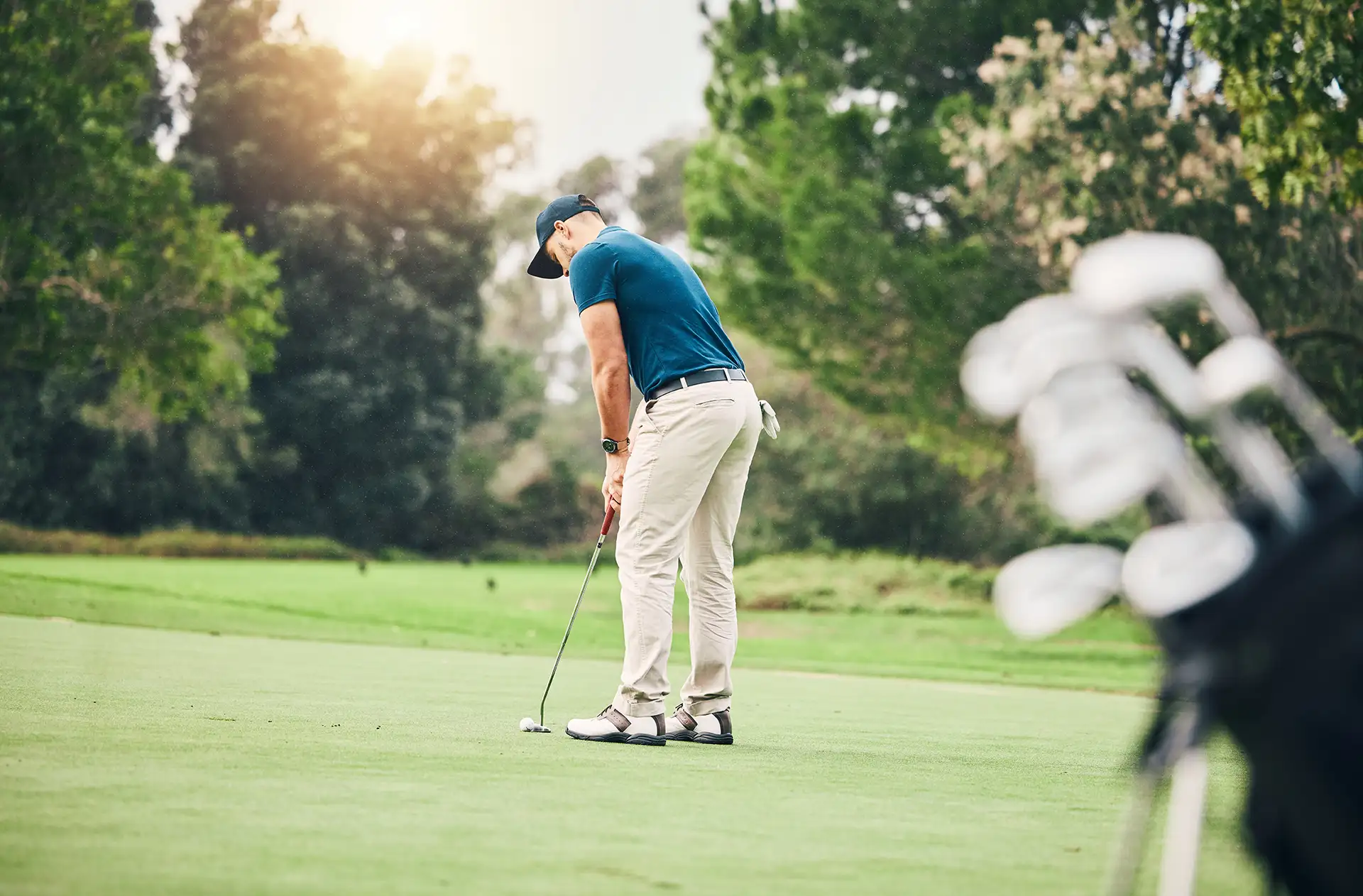


Experiencing a persistent ache on the inside of your elbow can be a frustrating and limiting problem. This discomfort might make simple tasks like picking up a coffee mug, turning a doorknob, or shaking someone’s hand surprisingly painful. If this sounds familiar, you may be dealing with a common condition known as golfer’s elbow. But where is golfer’s elbow pain located, and what does it feel like? In this post, we’ll take a closer look at golfer’s elbow, medically termed medial epicondylitis.
Key Takeaways
- Golfer’s elbow pain is primarily centered on the bony bump on the inside of the elbow, known as the medial epicondyle.
- The pain often radiates from the inner elbow down the forearm toward the wrist, and may be accompanied by stiffness, weakness in grip, and occasionally numbness or tingling in the ring and little fingers.
- The condition is an overuse injury caused by repetitive or forceful wrist and finger motions that damage the tendons connecting the forearm muscles to the elbow.
- Diagnosis is typically based on a physical examination, though imaging may be used to rule out other conditions. Treatment usually begins with conservative methods like rest, physical therapy, and activity modification.
Understanding Golfer’s Elbow: More Than Just a Golfer’s Problem
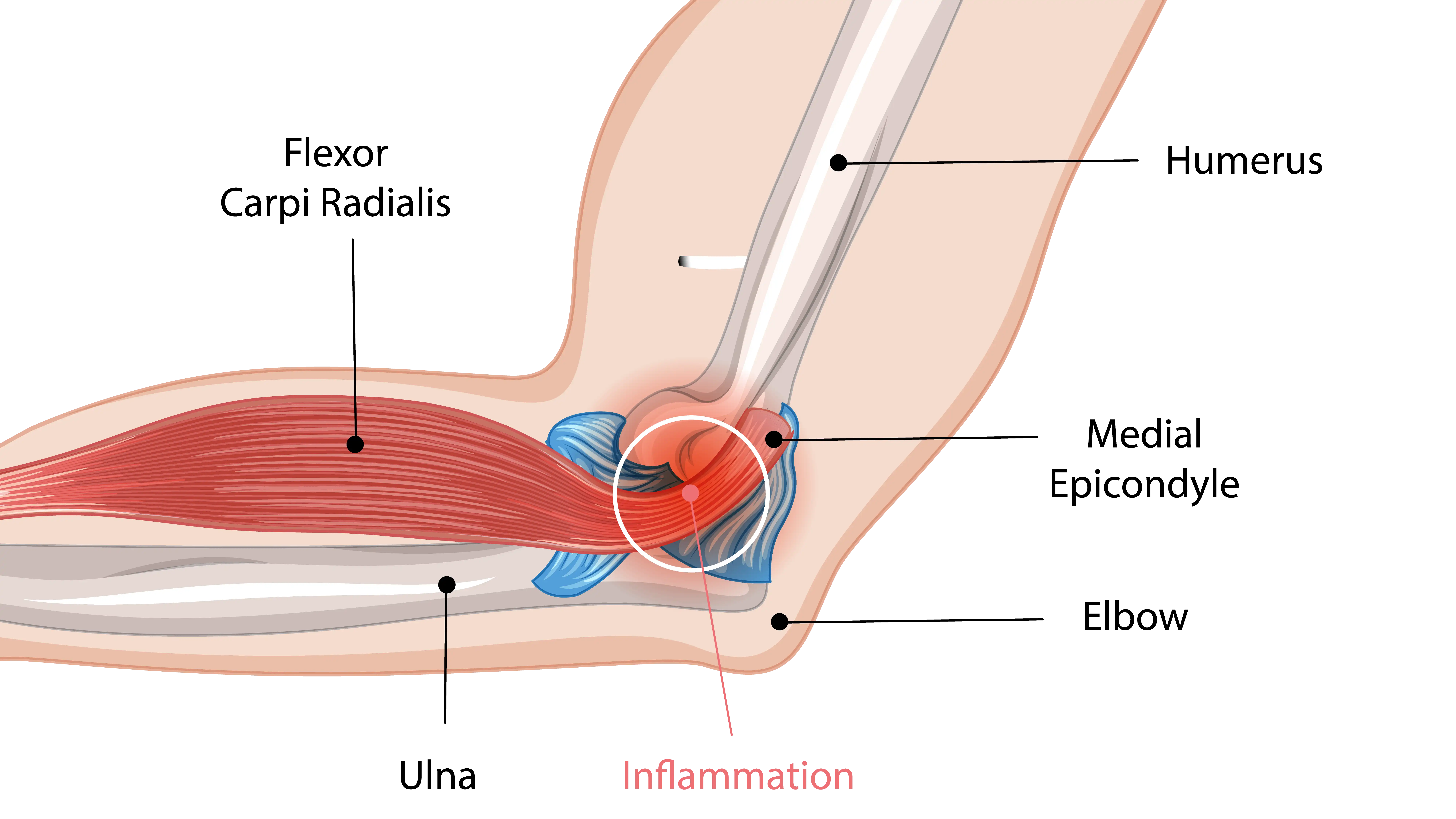
Despite its name, golfer’s elbow affects a wide range of individuals, not just those who frequent the golf course. It is an overuse injury that impacts the tendons responsible for flexing your wrist and fingers. These are the tendons of the flexor-pronator muscle group, which originate from a common point on the inner side of your elbow.
When you repeatedly use these muscles through activities involving forceful gripping, wrist bending, or throwing, it can lead to microscopic tears in the tendon at its attachment point. The body’s attempt to heal these tears can result in inflammation and degeneration, a condition called tendinopathy.
Pinpointing the Pain: Where is Golfer’s Elbow Pain Located?
The Primary Location: The Inner Elbow
The focal point of golfer’s elbow pain is the medial epicondyle. This is the bony prominence you can feel on the inside of your elbow. It serves as the anchor point for the tendons of your forearm flexor muscles. When these tendons become damaged or inflamed, this specific spot becomes tender to the touch. The pain is frequently described as a persistent ache or a sharp twinge right on this bony bump. For many, the discomfort is most pronounced in the morning or when initiating an activity after a period of rest.
Pain Radiation: A Spreading Sensation
While the origin is the medial epicondyle, the pain from golfer’s elbow rarely stays confined to that single point. It commonly radiates or spreads from the inner elbow down the front, or palm side, of the forearm. This path follows the course of the affected flexor muscles. The pain can extend all the way to the wrist, making it feel as though the entire inner forearm is sore.
What Does Golfer’s Elbow Feel Like? Associated Symptoms
Beyond the primary location and radiation of pain, golfer’s elbow presents with several other common symptoms.
- Stiffness: You might notice that your elbow feels stiff, particularly in the morning. Bending and straightening your arm may be difficult or uncomfortable until the joint has had a chance to warm up.
- Weakness: A noticeable decrease in grip strength is a very common complaint. You may find it difficult to hold onto objects, make a tight fist, or carry items like a grocery bag or a suitcase.
- Numbness or Tingling: In some cases, individuals may experience sensations of numbness or tingling that radiate into the ring and little fingers. This occurs because the ulnar nerve, often called the “funny bone,” runs in a groove just behind the medial epicondyle. The inflammation associated with golfer’s elbow can sometimes irritate this nerve, leading to these neurologic symptoms.
Common Causes of Inner Elbow Pain
Golfer’s elbow is fundamentally an overuse injury. It develops when the forearm muscles and tendons are subjected to more load than they can handle, leading to cumulative micro-damage. While a powerful golf swing is a classic cause, many other activities can trigger the condition.
Some of the most frequent causes include:
- Racket Sports: Activities like tennis, especially when using improper form for serves or forehand strokes, can place stress on the inner elbow. The forceful rotation and snap of the wrist during a serve, combined with the repetitive nature of the sport, can gradually damage the flexor tendons.
- Throwing Sports: Athletes in sports like baseball (pitchers), football, and javelin throwing are at high risk due to the repetitive, forceful motion of throwing.
- Weight Training: Lifting weights with improper technique, particularly during exercises like bicep curls, where the wrists are flexed, can overload the forearm tendons.
- Occupational Activities: Many jobs require forceful, repetitive hand, wrist, and forearm movements. Carpenters, plumbers, construction workers, and even individuals who type extensively can develop golfer’s elbow. Office workers who spend hours at a keyboard without proper ergonomic support may gradually develop symptoms over time.
- Other Activities: Any activity that involves repetitive gripping or wrist flexion, such as chopping wood, using a chainsaw, or carrying heavy luggage, can contribute to the condition.
How a Specialist Diagnoses Golfer’s Elbow
If you are experiencing persistent inner elbow pain, seeking an evaluation from a specialist is an important step. Early evaluation is particularly important if the pain is interfering with your work, hobbies, or daily activities.
The diagnostic process typically begins with a detailed discussion of your symptoms and medical history. Your doctor will ask about the location of your pain, what activities make it worse, and how it is impacting your daily life. They may inquire about your occupation, sports participation, and any recent changes in your activity level.
This is followed by a thorough physical examination. During the exam, your doctor will likely perform a specific maneuver known as the golfer’s elbow test. This involves you trying to flex your wrist downward against resistance provided by the examiner. If this action reproduces your pain at the medial epicondyle, it can be indicative of the condition. Your doctor will also gently press on the medial epicondyle to check for tenderness. They may assess your grip strength and compare it to the unaffected side. Additionally, they will evaluate the range of motion in your elbow and check for any signs of nerve involvement, such as numbness or tingling in your fingers.
In many cases, a diagnosis can be made based on your history and the physical exam alone. However, if the diagnosis is unclear or if there is a concern about other issues, your doctor may recommend imaging studies like X-ray, ultrasound, or MRI.
Navigating Treatment Options for Golfer’s Elbow
Once a diagnosis of golfer’s elbow is confirmed, a treatment plan can be developed. The majority of cases resolve with conservative, nonsurgical approaches. The goal of treatment is to reduce pain, promote tendon healing, and prevent the problem from recurring.
Nonsurgical Options for Relief
Treatment almost always begins with a period of conservative care. This may include a combination of the following strategies:
- Rest and Activity Modification: This means avoiding or modifying the activities that cause pain. This does not necessarily mean complete immobilization, but rather a strategic reduction in stress on the elbow. For example, if your job requires repetitive gripping, you might need to take more frequent breaks or adjust your workstation setup.
- Ice: Applying ice packs to the inner elbow for 15-20 minutes several times a day can help reduce pain and inflammation, especially after activity.
- Physical Therapy: A physical therapist can guide you through a specific program of stretching and strengthening exercises to help relieve pain and restore function.
- Bracing: Your doctor may recommend wearing a counterforce brace on your forearm. This brace helps to reduce the tension on the affected tendon at the elbow.
- Medications: Over-the-counter nonsteroidal anti-inflammatory drugs (NSAIDs), such as ibuprofen or naproxen, may be used to help manage pain and reduce inflammation.
When More Intervention May Be Needed
If several months of conservative treatment do not provide adequate relief, your doctor may discuss other options. For example, newer biologic treatments like platelet-rich plasma (PRP) injections aim to stimulate the body’s natural healing processes by concentrating growth factors from your own blood and injecting them into the damaged tendon.
Surgery is reserved for rare cases where symptoms are severe and have not resolved with non-surgical care. The procedure often involves removing the damaged tendon tissue and repairing the healthy tendon back to the bone. Following surgery, a period of rehabilitation with a physical therapist is usually necessary to restore strength and function to the elbow.
Preventive Strategies to Protect Your Elbow
If you engage in activities that put you at risk for golfer’s elbow, taking proactive steps can help protect your tendons and reduce your likelihood of developing this condition.
One of the most important preventive measures is to ensure you are using proper technique in your sports or work activities. If you play golf or tennis, consider working with a coach to refine your form and reduce unnecessary strain on your elbow. In the workplace, ergonomic adjustments may make a difference. Ensure your desk, chair, and computer are positioned to minimize strain on your arms and wrists.
Strengthening the muscles of your forearm, wrist, and shoulder can help them better absorb the forces placed on them during activity. Simple exercises, such as wrist curls with light weights or squeezing a stress ball, can help build resilience in these muscles. Equally important is incorporating regular stretching into your routine.
Warming up before engaging in strenuous activity is another key preventive step. A proper warm-up increases blood flow to the muscles and tendons, preparing them for the demands of exercise. Similarly, cooling down after activity and applying ice if you experience any discomfort can help prevent inflammation from taking hold.
Finally, listen to your body. If you begin to feel pain in your elbow, do not ignore it. Consider taking a break and addressing the issue.
Summary
The pain of golfer’s elbow, centered on the inner elbow and radiating down the forearm, can be a signal of tendon overuse. With a combination of rest, targeted physical therapy, and other conservative treatments, many individuals can achieve lasting relief and return to the activities they love. If you are experiencing persistent elbow pain, consider reaching out to an experienced elbow specialist who can provide a comprehensive evaluation and personalized treatment plan tailored to your needs.
Frequently Asked Questions
Can you have golfer’s elbow and tennis elbow at the same time?
While it is uncommon, it is possible to have both conditions simultaneously if you engage in activities that strain both the inner and outer elbow tendons. However, pain is usually dominant on one side.
How long does it take for golfer’s elbow to heal?
Healing time varies depending on the severity of the condition and adherence to treatment. With consistent conservative care, many people see significant improvement within six to twelve weeks. However, more severe cases can take several months or longer to fully resolve.
Should I wear a brace all day for golfer’s elbow?
It may be recommended to wear a counterforce brace during activities that stress the elbow, rather than wearing it all day. Your doctor or physical therapist can provide specific guidance on when and how to use a brace effectively.